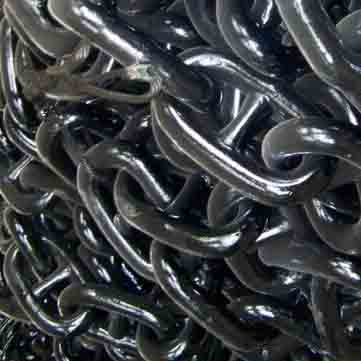
R4S Mooring Chain
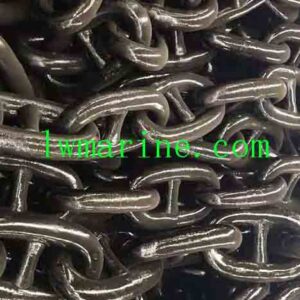
Engineered for the most demanding marine environments, our R4S mooring chain represents the pinnacle of advanced strength categories in modern offshore mooring systems. Specifically developed for deepwater oil & gas installations, floating production platforms, and heavy marine construction projects, this high-performance chain delivers the superior tensile strength and fatigue resistance required for permanent offshore structures.
With a minimum tensile strength of ≥960 MPa, the R4S grade offers a significant performance advantage over standard mooring chains, providing enhanced safety margins and operational reliability in deep and ultra-deep water applications. Manufactured under strict quality controls, our R4S studless mooring chain and stud-link variants are designed to withstand the extreme dynamic loads and corrosive conditions of long-term deployment in harsh offshore environments.
Key Applications:
-
Floating Production Storage and Offloading (FPSO) vessels
-
Semi-submersible drilling rigs
-
Deepwater oil & gas platforms
-
Floating Liquefied Natural Gas (FLNG) facilities
-
Offshore renewable energy installations
-
Heavy marine construction and salvage operations
Mooring Chain Grade Comparison
To help you select the right specification for your project, here is a comparison of common offshore mooring chain grades:
| Grade | Tensile Strength | Typical Use |
|---|---|---|
| R3 / R3S | 690-800 MPa | Shallow-water applications, moderate environmental conditions |
| R4S | ≥960 MPa | Deepwater installations, high-load mooring systems |
| R5 | ≥1100 MPa | Ultra-deepwater projects, extreme depth requirements |
R4S Mooring Chain Technical Parameters
Below are the detailed specifications for our high-strength mooring chain, including breaking loads and tensions for both studless and stud-link configurations across a comprehensive range of diameters.
| Chain Diameter (mm) | Breaking Load (kN) | Studless Tension (kN) | Stud Tension (kN) |
|---|---|---|---|
| 34 | 1451 | 1017 | 1146 |
| 36 | 1621 | 1136 | 1279 |
| 38 | 1799 | 1260 | 1420 |
| 40 | 1985 | 1391 | 1567 |
| 42 | 2180 | 1527 | 1721 |
| 44 | 2383 | 1670 | 1881 |
| 46 | 2594 | 1818 | 2048 |
| 48 | 2813 | 1971 | 2221 |
| 50 | 3040 | 2130 | 2400 |
| 52 | 3275 | 2295 | 2586 |
| 54 | 3518 | 2465 | 2777 |
| 56 | 3768 | 2640 | 2975 |
| 58 | 4026 | 2821 | 3178 |
| 60 | 4291 | 3006 | 3387 |
| 62 | 4563 | 3197 | 3602 |
| 64 | 4842 | 3393 | 3823 |
| 66 | 5128 | 3593 | 4048 |
| 68 | 5421 | 3798 | 4280 |
| 70 | 5721 | 4008 | 4516 |
| 73 | 6182 | 4332 | 4881 |
| 76 | 6659 | 4666 | 5257 |
| 78 | 6984 | 4894 | 5514 |
| 81 | 7484 | 5244 | 5909 |
| 84 | 7997 | 5603 | 6314 |
| 87 | 8523 | 5972 | 6729 |
| 90 | 9062 | 6350 | 7154 |
| 92 | 9428 | 6606 | 7443 |
| 95 | 9987 | 6998 | 7885 |
| 97 | 10366 | 7263 | 8184 |
| 100 | 10944 | 7668 | 8640 |
| 102 | 11336 | 7943 | 8950 |
| 105 | 11932 | 8361 | 9420 |
| 107 | 12335 | 8643 | 9739 |
| 111 | 13155 | 9217 | 10386 |
| 114 | 13781 | 9656 | 10880 |
| 117 | 14416 | 10101 | 11381 |
| 120 | 15059 | 10552 | 11889 |
| 122 | 15493 | 10856 | 12232 |
| 124 | 15931 | 11162 | 12577 |
| 127 | 16593 | 11626 | 13100 |
| 130 | 17263 | 12095 | 13629 |
| 132 | 17713 | 12411 | 13984 |
| 137 | 18852 | 13209 | 14884 |
| 142 | 20008 | 14019 | 15796 |
| 147 | 21179 | 14840 | 16721 |
| 152 | 22364 | 15669 | 17656 |
| 157 | 23559 | 16507 | 18600 |
| 162 | 24765 | 17352 | 19551 |
| 165 | 25492 | 17861 | 20125 |
| 168 | 26221 | 18372 | 20701 |
| 171 | 26953 | 18885 | 21279 |
| 175 | 27930 | 19570 | 22050 |
| 178 | 28665 | 20085 | 22630 |
| 180 | 29155 | 20428 | 23017 |
| 182 | 29646 | 20772 | 23405 |
| 185 | 30381 | 21287 | 23985 |
| 188 | 31117 | 21802 | 24566 |
| 191 | 31852 | 22317 | 25146 |
| 194 | 32585 | 22831 | 25725 |
| 197 | 33318 | 23345 | 26304 |
| 200 | 34048 | 23856 | 26880 |
| 205 | 35261 | 24706 | 27838 |
| 210 | 36466 | 25550 | 28789 |
Frequently Asked Questions (FAQs)
Q1: What makes R4S mooring chain different from standard R3 or R3S grades?
A: The primary difference is the tensile strength. R4S mooring chain offers a minimum tensile strength of ≥960 MPa, which is significantly higher than R3/R3S grades (690-800 MPa). This increased strength allows for a higher working load limit for the same diameter chain, or alternatively, the use of a smaller, lighter chain to achieve the same holding capacity. This makes R4S the preferred choice for deepwater mooring systems where weight and performance are critical factors.
Q2: What is the difference between “studless tension” and “stud tension” in the specifications?
A: These values refer to the tension capacity for two different chain designs. Stud tension applies to traditional stud-link chain, where a solid bar (stud) is fitted across each link for stability. Studless tension applies to modern studless chain designs. Generally, for the same diameter, stud-link chain can handle slightly higher tension due to the reinforcing effect of the stud. However, studless mooring chain is often preferred for deepwater applications due to its lighter weight, reduced risk of stud loss, and easier handling through fairleads and windlasses.
Q3: Is R4S chain suitable for permanent mooring systems like FPSOs?
A: Yes, absolutely. R4S grade is specifically engineered for permanent offshore structures such as FPSOs, semi-submersibles, and deepwater platforms. Its high tensile strength and excellent fatigue resistance make it ideal for withstanding the continuous, cyclic loads experienced in long-term deployments. It is a standard choice for spread mooring and turret mooring systems in deep and ultra-deep water.
Q4: What certifications are available for your R4S mooring chain?
A: Our offshore mooring chain is manufactured to meet the stringent requirements of international classification societies. We can supply the chain with full certification from major bodies including DNV·GL, ABS, BV, LR, CCS, KR, NK, RINA, and RS. This certification provides documented proof of the chain’s mechanical properties, traceability, and compliance with industry standards.
Q5: What does “Breaking Load” mean, and how does it relate to the working load limit?
A: The Breaking Load (listed in kN) is the calculated minimum force at which the chain is expected to break during a destructive test. It is a critical design parameter. The safe working load limit (WLL) is a fraction of the breaking load, determined by a safety factor (often 3:1, 4:1, or higher for permanent moorings). The design of a mooring system must ensure that the maximum expected tension on the chain never exceeds the safe working load, providing a substantial safety margin.
Q6: Can R4S chain be used in ultra-deepwater projects, or is R5 required?
A: R4S chain is highly suitable for a wide range of deepwater projects. However, for ultra-deepwater projects (typically exceeding 1,500-2,000 meters), the extreme water depth results in enormous weight and tension on the mooring lines. In these cases, the even higher strength of R5 grade (≥1100 MPa) may be required to minimize chain diameter and weight while maintaining the necessary strength. The choice between R4S and R5 depends on the specific water depth, environmental conditions, and platform design.
Attention please: The description was copied from different cooperating manufacturers. The description may be different with the goods, please check with us when order.
Tag: Our other products
Click here to contact us via whatsapp