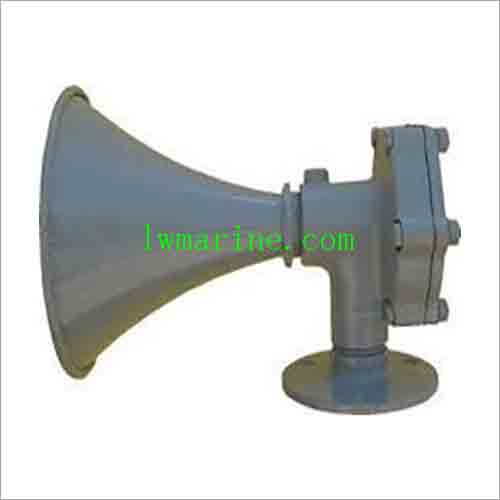
Marine whistle – A Vital Marine Sound Signaling Device for Enhanced Safety and Communication
A marine whistle, also recognized as a steam whistle or marine sound signaling apparatus, is an essential device employed on ships to generate a loud, unmistakable sound that can be discerned from a substantial distance. This maritime signaling equipment is predominantly powered by steam or compressed air and serves multiple crucial functions. It is utilized to notify other vessels of the ship’s presence, facilitate communication among crew members, and issue navigational warnings.
Ship whistles exhibit a diverse range of sizes and designs. However, they commonly feature a metal horn with a mouthpiece and a valve mechanism that regulates the flow of steam or air. This valve mechanism is linked to a pressurized steam or air source, which is released through the horn to create the characteristic sound.
Beyond its indispensable role in ensuring safety at sea, the ship whistle boasts a rich historical legacy and is often regarded as an iconic element of classic ships and steamboats. While many modern ships continue to rely on steam whistles, electronic and pneumatic alternatives are also available in the market.
Materials:
Ship whistles can be crafted from an array of materials, including brass, bronze, stainless steel, and plastic. Brass and bronze whistles are widely favored for their exceptional durability and resistance to corrosion. Stainless steel whistles, although also durable and capable of withstanding harsh marine environments, tend to be more expensive than their brass or bronze counterparts. Plastic whistles, on the other hand, are lightweight and cost-effective, but may not offer the same level of durability and longevity as metal whistles. The selection of material often hinges on factors such as the vessel’s size, the desired sound output, and the frequency of use.
Product Characteristics:
The fundamental frequency of the ship whistle should fall within the range of 70–700 Hz. The audible distance of the whistle is influenced by its frequency. For ships measuring 20 meters or more in length, the frequency range is 180–700 Hz, while for ships less than 20 meters in length, it is 180–2100 Hz. This ensures that the whistle can effectively communicate signals over varying distances, depending on the vessel’s size.
Adopted Standards:
The ship whistle complies with the Statutory Inspection Rules for Ships and Offshore Installations, the International Regulations for Preventing Collisions at Sea (COLREGs) of 1972 and 1974, the SOLAS Convention Amendment of 1996, as well as CB/T3142-94 and CB/T428-93 standards. These stringent regulations guarantee the whistle’s reliability and safety in maritime operations.
Selecting the Appropriate Ship Whistle:
When choosing a ship whistle, several key factors must be taken into account, including the vessel’s size, operating conditions, and regulatory requirements. Here are some pertinent questions to consider:
- What is the vessel’s size and operating conditions?
- The size and intended use of the vessel will dictate the required sound output level and range of the ship whistle. Larger vessels may necessitate a more powerful whistle to ensure adequate audibility over long distances.
- What are the regulatory requirements for the vessel’s location and use?
- Different countries and regions have distinct regulations governing the type, sound output level, and installation requirements for ship whistles. It is imperative to verify that the selected whistle adheres to the relevant regulations to avoid any legal complications.
- What are the environmental conditions in which the ship whistle will be used?
- The noise level of a ship whistle can be influenced by the surrounding environment, including wind and sea conditions. It is crucial to evaluate the environment in which the whistle will be deployed to ensure that it can effectively convey the intended signal under various circumstances.
- What is the construction and material quality of the ship whistle?
- The durability and reliability of a ship whistle are paramount, as it serves as a critical safety device on the vessel. Opt for a whistle constructed from high-quality materials that can withstand the rigors of the marine environment and ensure regular maintenance to prolong its lifespan.
FAQs:
- Q: How does a ship whistle work?
- A: A ship whistle operates by releasing pressurized steam or air through a metal horn with a valve mechanism. The valve controls the flow of steam or air, which generates a loud, distinct sound that can be heard from a considerable distance.
- Q: What is the typical frequency range of a ship whistle?
- A: The fundamental frequency of a ship whistle should be within the range of 70–700 Hz. For ships 20 meters or more in length, the frequency range is 180–700 Hz, while for ships less than 20 meters, it is 180–2100 Hz.
- Q: Are there different types of ship whistles available?
- A: Yes, ship whistles come in various types, including steam whistles, electronic whistles, and pneumatic whistles. Each type has its unique characteristics and is suitable for different applications and vessel sizes.
- Q: How do I choose the right ship whistle for my vessel?
- A: When selecting a ship whistle, consider factors such as the vessel’s size, operating conditions, regulatory requirements, environmental conditions, and the construction and material quality of the whistle. These factors will help you determine the most appropriate whistle for your specific needs.
- Q: Can a ship whistle be used in all weather conditions?
- A: While ship whistles are designed to withstand harsh marine environments, extreme weather conditions such as heavy rain, strong winds, or fog may affect their audibility. It is advisable to regularly inspect and maintain the whistle to ensure optimal performance under varying weather conditions.
Please Note: The description might be incorrect, please contact us for confirmation.
Tag: Our other products
Click here to send inquiry via whatsapp