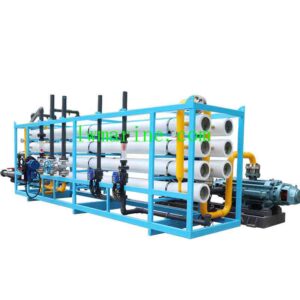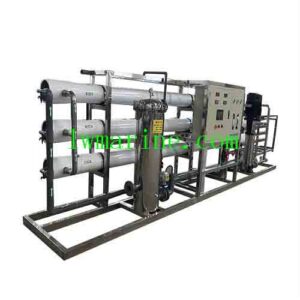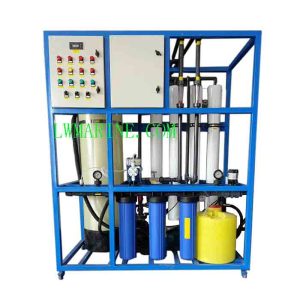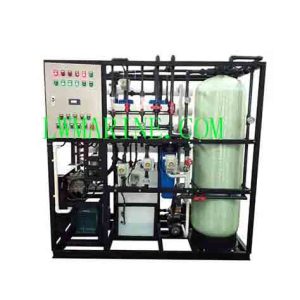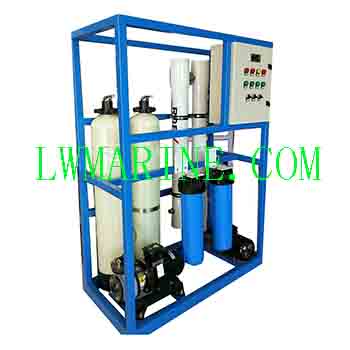
Marine Fresh Water Generator FWG
Liwai Marine offers a comprehensive range of Reverse Osmosis fresh water makers, providing reliable, high-quality freshwater generation for vessels and offshore installations worldwide. We specialize in three distinct types of systems—tube type, plate type, and reverse osmosis type—allowing us to tailor a solution to your specific operational needs and space constraints.
Today, reverse osmosis (RO) is the most common and efficient method used onboard for generating fresh water from seawater. Our marine RO systems are widely used on ships, offshore rigs, and at remote onshore locations where a reliable source of potable water is essential. By forcing seawater through semi-permeable membranes under high pressure, our systems effectively remove salts, minerals, and other impurities.
The fresh water produced by our shipboard watermakers is of the highest quality, suitable for a variety of critical applications, including:
-
Drinking and cooking for crew and passengers.
-
Washing and cleaning throughout the vessel.
-
Cooling medium for auxiliary machinery and systems that require fresh water.
Built for durability and efficiency in the harsh marine environment, our commercial RO desalination systems are designed for long-term, trouble-free operation.
For more information about our reverse osmosis fresh water maker range, including technical specifications, pricing, or custom configurations, please contact our dedicated sales team.
Technical Specifications: FWG Series Marine RO Systems
Below are the specifications for our standard FWG series marine reverse osmosis systems. Capacities are in Tons per Day (T/D).
| Model (T/D) | FWG-5 | FWG-10 | FWG-16 | FWG-20 | FWG-30 | FWG-50 |
|---|---|---|---|---|---|---|
| Capacity (T/D) | 5 | 10 | 16 | 20 | 30 | 50 |
| Length (mm) | 770 | 970 | 970 | 1160 | 1400 | 1400 |
| Width (mm) | 600 | 870 | 1150 | 1150 | 1250 | 1450 |
| Height (mm) | 960 | 1150 | 1150 | 1415 | 1550 | 1550 |
| Dry Weight (kg) | 300 | 650 | 900 | 1150 | 1350 | 1450 |
| Operation Weight (kg) | 350 | 700 | 950 | 1250 | 1450 | 1600 |
Frequently Asked Questions (FAQs)
Q1: How does a reverse osmosis fresh water maker work?
A: A reverse osmosis fresh water maker works by applying high pressure to seawater on one side of a specialized semi-permeable membrane. This pressure forces water molecules through the membrane, which acts as an extremely fine filter. The membrane allows fresh water to pass while rejecting dissolved salts, minerals, and other impurities, which are then concentrated and discharged as brine. The result is high-quality fresh water suitable for drinking and other onboard uses.
Q2: What is the difference between the tube type, plate type, and reverse osmosis type you offer?
A: These refer to different technologies for freshwater generation. Reverse osmosis type (which we focus on) uses membrane filtration and is the most energy-efficient and common method today. Tube type and plate type refer to older evaporation or distillation methods (like submerged tube or plate evaporators) which use heat (often from the engine’s jacket water) to boil seawater and condense the steam. While still found on some vessels, RO systems are preferred for new builds due to their lower energy consumption and smaller footprint.
Q3: What is the quality of the fresh water produced by these marine RO systems?
A: Our shipboard watermakers are designed to produce fresh water that meets or exceeds international standards for potable (drinking) water. The product water typically has a very low salinity, often less than 500 parts per million (ppm) Total Dissolved Solids (TDS), compared to seawater which is around 35,000 ppm. This makes it perfectly safe and suitable for drinking, cooking, washing, and as makeup water for cooling systems and boilers.
Q4: How do I choose the right capacity (e.g., 5 T/D vs. 50 T/D) for my vessel?
A: The required capacity depends on your vessel’s crew size, operational profile, and freshwater needs. A good rule of thumb is to estimate the daily consumption per person (e.g., 100-200 liters/day) and add allowances for galley use, laundry, and any technical consumers (like engine cooling top-up). For example, a small crew of 15 might need a 5 T/D unit, while a large offshore vessel with a crew of 50 and more amenities might require a 20 T/D or larger system. Our sales team can help you calculate your specific needs.
Q5: What maintenance is required for a marine RO desalination system?
A: Routine maintenance is essential for long-term reliability. Key tasks include regular cleaning or replacement of the pre-filters (which remove larger particles before the water reaches the delicate RO membranes), monitoring and adjusting chemical dosing (anti-scalants), and periodic cleaning of the RO membranes themselves (chemical cleaning) to remove fouling. The membranes themselves have a lifespan of several years before needing replacement.
Q6: Can these reverse osmosis systems be installed on existing ships, or are they only for new builds?
A: Yes, our commercial RO desalination systems are suitable for both new construction and retrofit projects. They are designed as skid-mounted units, as shown in the dimensional data, which allows for relatively straightforward installation in a vessel’s engine room or a dedicated machinery space. We can work with your team or shipyard to ensure a smooth integration into your existing ship’s systems.
Attention please: The description was copied from different cooperating manufacturers. The description may be different with the goods, please check with us when order.
Tag: Our other products
Click here to contact us via whatsapp