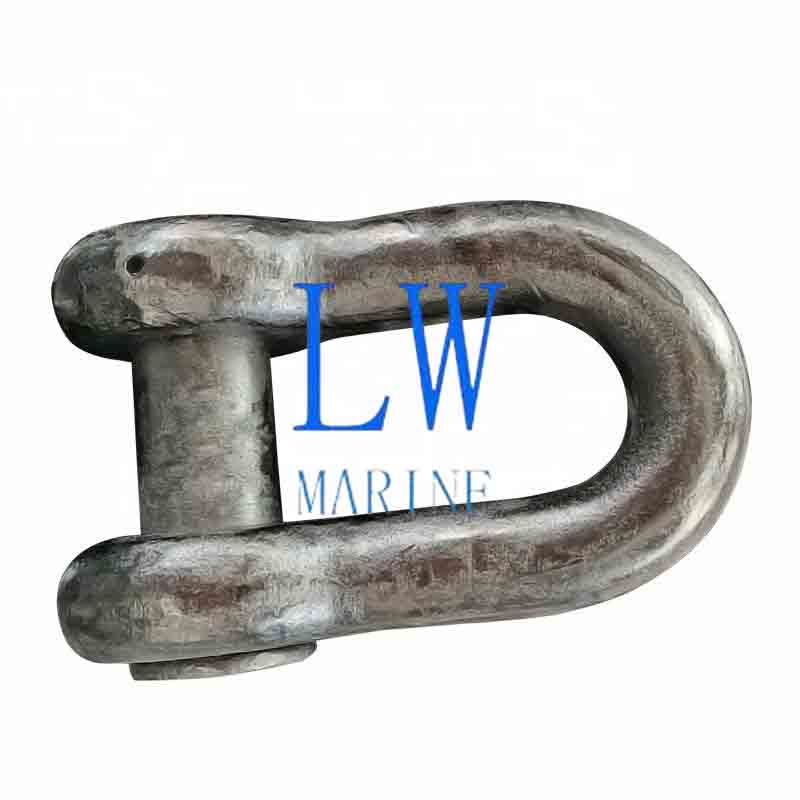
Anchor Chain Joining Shackle
The Marine Connecting Shackle, also known as a joint shackle, is a fundamental connecting device widely used in mechanical engineering, marine operations, offshore rigging, and heavy lifting applications. These critical components provide secure, reliable connections between wire ropes, chains, vehicle bodies, pulleys, and rigid traction frames, ensuring the integrity of lifting and mooring systems under extreme loads.
Comprehensive Range of Shackle Types
Common engineering shackles include various configurations to suit different applications:
| Shackle Type | Description | Typical Application |
|---|---|---|
| European Big Bow Shackle | Wide body design accommodates multiple line angles | General rigging, multi-leg slings |
| European Big DEE Shackle | Deeper profile for specific fitting requirements | Specialized rigging applications |
| Round-Head Shackle | Traditional design, good general-purpose use | General lifting and rigging |
| Square-Head Shackle | Positive grip for wrench tightening | Heavy-duty applications requiring secure fastening |
| D-Shape Shackle | Classic symmetrical design, high strength-to-weight ratio | Most common general-purpose shackle |
Screw Shackle Design
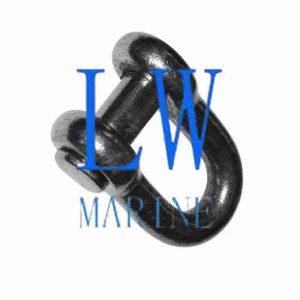
The screw shackle features a pin and bend ring connected by threads, providing:
-
Secure Connection: Threaded engagement prevents accidental disconnection
-
Easy Assembly/Disassembly: Can be installed and removed with simple tools
-
Reliable Performance: Maintains integrity under dynamic loads
Pin Types:
-
Round Pin: Smooth contact with curved ring hole, can be drawn out directly
-
Oval Pin: Provides additional orientation control
Rescue Operations: The Connecting Ring
In rescue operations, the shackle is commonly referred to as a connecting ring—a vital link between:
-
Steel wire rope sections
-
Steel wire rope and vehicle body
-
Steel wire rope and pulley
-
Rigid traction frame and vehicle body
The form of the connecting ring varies according to its specific purpose, with designs optimized for different rescue scenarios.
Anchor Chain Accessories – One-Stop Shopping
To provide one-stop shopping for marine and offshore customers, we offer a comprehensive range of anchor chain accessories:
| Accessory | Description | Application |
|---|---|---|
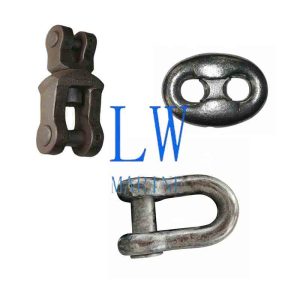
| Kenter Shackle | Detachable connecting link for stud link chain | Joining chain sections, allowing length adjustment |
| Pontoon Shackle | Heavy-duty connector for floating structures | Connecting mooring lines to pontoons |
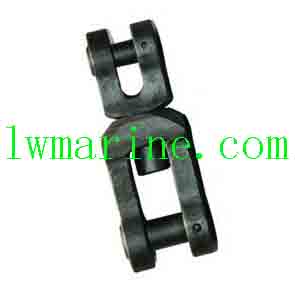
| Swivel Groups | Rotating assemblies that prevent twisting | Reducing torque in mooring systems |
| Anchor Swivel Shackle | Combines swivel function with shackle connection | Allowing anchor to rotate without twisting chain |
| Joining Shackle | General-purpose chain connectors | Various chain-to-chain connections |
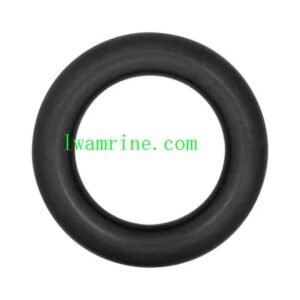
| Common Link | Standard chain link for repairs | Replacing damaged individual links |
| Enlarged Link | Oversized link for special connections | Transitioning between different chain sizes |
Key Features & Benefits
-
✅ Wide Range of Types: European big bow, DEE, round-head, square-head, D-shape, and more.
-
✅ Multiple Specifications: Numerous sizes and load ratings to suit any application.
-
✅ Screw Shackle Design: Threaded pin connection for secure, reliable joining.
-
✅ Round & Oval Pin Options: Choose based on application requirements.
-
✅ Anchor Chain Accessories: Complete range including Kenter shackles, swivels, and joining links.
-
✅ Rated Load Selection: Easy selection based on product-rated capacity.
-
✅ Rescue Application Versatility: Various connecting ring forms for different rescue scenarios.
-
✅ High-Strength Construction: Built to withstand extreme loads and harsh marine environments.
-
✅ Corrosion-Resistant Materials: Suitable for long-term marine service.
Applications
Marine connecting shackles and anchor chain accessories are essential components in numerous applications:
Marine & Offshore
-
Anchor Systems: Connecting anchor chain to anchor, chain to chain
-
Mooring Lines: Connecting lines to buoys, vessels, and dock fittings
-
Towing Operations: Connecting tow lines to vessels
-
Offshore Platforms: Mooring system connections
-
FPSO & FSO: Turret and spread mooring systems
Rescue Operations
-
Vehicle Recovery: Connecting recovery straps to vehicles
-
Wire Rope Connections: Joining multiple rope sections
-
Pulley Systems: Connecting rope to pulleys
-
Rigid Traction Frames: Frame-to-vehicle connections
General Engineering & Rigging
-
Lifting Operations: Connecting slings to loads
-
Heavy Equipment Transport: Securing equipment for transport
-
Construction Sites: Various rigging applications
-
Industrial Maintenance: Equipment lifting and positioning
Selection Guide
How to Select the Correct Shackle
| Step | Consideration |
|---|---|
| 1. Determine Required Load | Calculate maximum working load based on application |
| 2. Select Rated Load | Choose shackle with rated capacity ≥ required load |
| 3. Choose Shackle Type | Consider space constraints, line angles, connection type |
| 4. Select Material | Based on environment (standard steel, galvanized, stainless) |
| 5. Verify Pin Type | Round pin for general use; oval for orientation control |
| 6. Check Dimensions | Ensure shackle fits available space and line sizes |
Important: There are many specifications of shackle products available. Direct selection can be made according to the rated load of the products based on actual usage requirements.
Frequently Asked Questions (FAQs)
Q1: What is the difference between a bow shackle and a D-shackle?
A: The primary difference is the shape and load application:
| Feature | Bow Shackle | D-Shackle (Chain Shackle) |
|---|---|---|
| Shape | Wide, rounded body (like a bow) | Narrow, symmetrical “D” shape |
| Load Angle | Can accept loads from multiple angles | Designed for inline loading |
| Side Loading | Tolerates some side loading | Minimal side loading capacity |
| Typical Use | Multi-leg slings, wide connections | Inline connections, chain attachments |
| Strength-to-Weight | Good | Excellent |
Choose bow shackles when loads may come from different angles. Choose D-shackles for inline applications where maximum strength and minimal weight are priorities.
Q2: What is a Kenter shackle, and why is it important for anchor chain?
A: A Kenter shackle (also called a detachable link) is a special connecting link used to join two lengths (shackles) of stud link anchor chain. Its importance stems from several unique features:
| Feature | Benefit |
|---|---|
| Detachable Design | Can be assembled/disassembled without special tools |
| Same Profile | When assembled, has same external dimensions as chain links |
| Smooth Passage | Passes through windlass gypsies and chain stoppers without jamming |
| Inspection Access | Allows periodic internal inspection of chain locker ends |
| Length Adjustment | Enables changing chain length by adding/removing shackles |
| End-for-End Turning | Facilitates turning chain to distribute wear |
Kenter shackles are essential for any chain system that requires length adjustment, periodic inspection, or replacement of damaged sections.
Q3: How do I select the correct shackle size for my application?
A: Selection should consider multiple factors:
-
Working Load Limit (WLL): This is the most critical factor. Never exceed the rated WLL.
-
Line Size: Ensure the shackle opening accommodates the wire rope, chain, or strap being used.
-
Pin Diameter: Must match or exceed the eye size of fittings being connected.
-
Material: Consider environment (standard steel for indoor, galvanized for marine, stainless for corrosion-critical).
-
Type: Bow for multi-angle loading, D-shape for inline loads.
-
Certification: For critical applications, require certified shackles with traceability.
Safety Margin: Always select a shackle with WLL exceeding the maximum expected load by an appropriate safety factor (typically 4:1 to 6:1 for lifting, higher for personnel safety).
Q4: What is the purpose of a swivel in anchor systems?
A: A swivel (or swivel group) serves several critical functions in anchor and mooring systems:
| Function | Benefit |
|---|---|
| Torque Release | Allows rotation, preventing chain twist from building up |
| Anchor Orientation | Lets anchor orient naturally to load direction |
| Vessel Movement | Accommodates vessel rotation around anchor point |
| Reduced Wear | Prevents chain links from grinding against each other |
| Improved Setting | Helps anchor set properly by allowing free orientation |
In anchor systems, swivels are typically placed:
-
Between anchor and first chain section
-
At strategic points in mooring lines
-
Where chain connects to vessel or buoy
Without swivels, torque can build up in chains, causing kinking, accelerated wear, and potential failure.
Q5: What are common link and enlarged link used for in anchor chain systems?
A: These specialized links serve specific purposes:
Common Link:
-
Standard chain link used to replace damaged individual links
-
Maintains chain integrity after repair
-
Must match original chain specifications (size, grade, material)
Enlarged Link:
-
Oversized link used for transitions between different chain sizes
-
Accommodates connection of dissimilar components
-
Often used where chain connects to end fittings
-
Provides additional material for welding or attachment
Both require careful material matching to ensure the repair or transition maintains the chain’s original strength and fatigue life.
Attention please: The description was copied from different cooperating manufacturers. The description may be different with the goods, please check with us when order.
Tag: Our other products
Click here to contact us via whatsapp