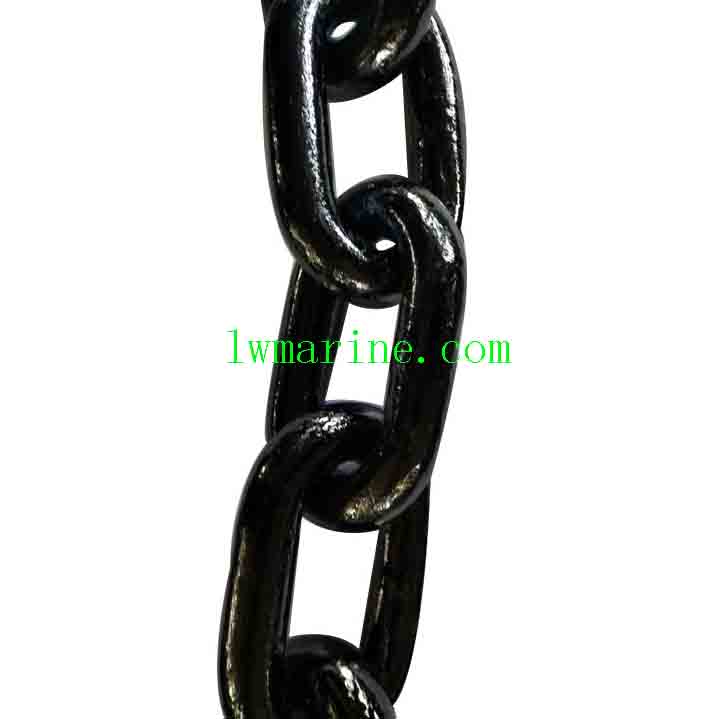
Anchor Chain for Buoy Mooring System
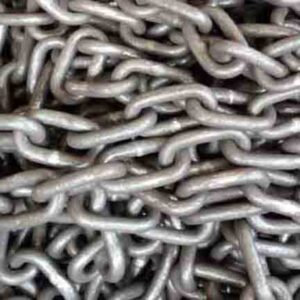
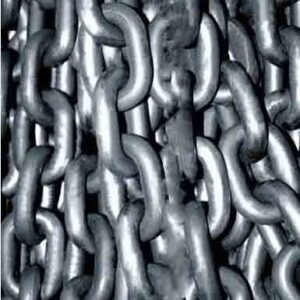
Ensure the precise and reliable station-keeping of your marine assets with our premium anchor chain for buoy mooring systems. Engineered to excel in the most demanding marine environments, this high-strength mooring chain is the critical component for maintaining exact buoy placement despite strong currents, powerful waves, and long-term exposure to seawater.
Each system is custom-built using top-tier materials to provide a permanent and secure mooring solution. Whether for navigation buoys, research platforms, or aquaculture sites, our chains are manufactured to withstand the relentless forces of the open ocean. We produce a full range of offshore mooring chain grades to meet diverse project requirements.
Our buoy mooring chains are available in diameters ranging from 34mm to 162mm and are subdivided into five grades based on nominal tensile strength: R3, R3S, R4, R4S, and R5. This allows for precise engineering匹配 to the specific load and environmental conditions of your site. All chains are manufactured in compliance with stringent international standards, including OFFSHORE STANDARD DNV-OS-E302 and IACS-W22-OFFSHORE MOORING CHAIN, and are available with certification from major classification societies such as ABS, LR, BV, DNV, and CCS.
Key Features & Benefits
-
Multiple High-Strength Grades: Available in R3, R3S, R4, R4S, and R5 steel grades, allowing you to select the optimal balance of strength, weight, and fatigue resistance for your specific offshore mooring application.
-
Exceptional Durability: Constructed from high-quality alloy steel, these chains offer superior resistance to wear, fatigue, and corrosion in harsh saltwater environments.
-
Global Certifications: Fully certified by leading classification societies including ABS, LR, BV, DNV, and CCS, ensuring compliance with international safety and quality standards for marine and offshore mooring.
-
Versatile Applications: Ideal for a wide range of uses, including offshore oil platforms, offshore oil storage ships (FPSO), offshore buoys, fishing farms, and various aquaculture purposes.
-
Custom Engineered: Each chain is custom-built to meet the specific dimensional and strength requirements of your project, ensuring a perfect fit for your mooring system design.
Technical Specifications & Dimensions
Our anchor chain sizes are manufactured to precise tolerances. Below are the dimensional details for our stud link anchor chains.
Anchor Chain Dimensions (Stud Link)
| a1 (mm) | e1 (mm) | f1 (mm) | g1 (mm) | d (mm) | d3 (mm) | L (mm) | B (mm) | b1 (mm) | h1 (mm) |
|---|---|---|---|---|---|---|---|---|---|
| 9 | 18 | 31 | 2 | 11 | 14 | 78 | 44 | 16 | 30 |
| 10 | 20 | 35 | 2.5 | 12.5 | 16 | 89 | 50 | 16 | 30 |
| 11 | 23 | 39 | 3 | 14 | 19 | 99 | 56 | 16 | 38 |
| 13 | 26 | 45 | 3 | 16 | 20.5 | 114 | 64 | 16 | 35 |
| 14 | 28 | 49 | 3.5 | 17.5 | 23 | 124 | 70 | 22 | 46 |
| 15 | 30 | 53 | 4 | 19 | 25 | 135 | 76 | 22 | 46 |
| 16.5 | 33 | 57 | 4 | 20.5 | 27 | 146 | 82 | 22 | 46 |
| 17.5 | 35 | 61 | 4.5 | 22 | 29 | 156 | 88 | 22 | 58 |
| 19 | 38 | 67 | 5 | 24 | 31 | 170 | 96 | 22 | 58 |
| 21 | 42 | 73 | 5 | 26 | 34 | 185 | 104 | 22 | 58 |
| 22.5 | 45 | 78 | 5.5 | 28 | 36 | 199 | 112 | 25 | 75 |
| 24 | 48 | 84 | 6 | 30 | 39 | 213 | 120 | 25 | 75 |
| 25.5 | 51 | 90 | 6.5 | 32 | 42 | 227 | 128 | 25 | 75 |
| 27 | 54 | 95 | 7 | 34 | 44 | 241 | 136 | 25 | 90 |
| 29 | 58 | 101 | 7 | 36 | 47 | 256 | 144 | 25 | 90 |
| 31 | 62 | 106 | 7.5 | 38 | 49 | 271 | 152 | 25 | 90 |
| 32 | 64 | 112 | 8 | 40 | 52 | 284 | 160 | 37 | 105 |
| 34 | 68 | 118 | 8.5 | 42 | 55 | 300 | 168 | 37 | 105 |
| 35 | 70 | 123 | 9 | 44 | 57 | 312 | 176 | 37 | 105 |
| 37 | 74 | 129 | 9 | 46 | 60 | 327 | 184 | 37 | 120 |
| 38.5 | 77 | 134 | 9.5 | 48 | 62 | 341 | 192 | 37 | 120 |
| 40 | 80 | 140 | 10 | 50 | 65 | 355 | 200 | 37 | 120 |
Proof & Breaking Test Loads
| Test Load (kN) | Grade R3 Stud Link | Grade R3S Stud Link | Grade R4 Stud Link | Grade R4S Stud Link | Grade R5 Stud Link |
|---|---|---|---|---|---|
| Proof | 0.0148 d² (44 – 0.08d) | 0.0180 d² (44 – 0.08d) | 0.0216 d² (44 – 0.08d) | 0.0240 d² (44 – 0.08d) | 0.0251 d² (44 – 0.08d) |
| Break | 0.0223 d² (44 – 0.08d) | 0.0249 d² (44 – 0.08d) | 0.0274 d² (44 – 0.08d) | 0.0304 d² (44 – 0.08d) | 0.0320 d² (44 – 0.08d) |
| Test Load (kN) | Grade R3 Studless | Grade R3S Studless | Grade R4 Studless | Grade R4S Studless | Grade R5 Studless |
|---|---|---|---|---|---|
| Proof | 0.0148 d² (44 – 0.08d) | 0.0174 d² (44 – 0.08d) | 0.0192 d² (44 – 0.08d) | 0.0213 d² (44 – 0.08d) | 0.0223 d² (44 – 0.08d) |
| Break | 0.0223 d² (44 – 0.08d) | 0.0249 d² (44 – 0.08d) | 0.0274 d² (44 – 0.08d) | 0.0304 d² (44 – 0.08d) | 0.0320 d² (44 – 0.08d) |
-
Chain Weight (Stud Link): 0.0219d² kg/m
-
Pitch Length (5 Link Measure): Minimum 22d, Maximum 22.55d
Mechanical Properties
| Grade | Yield Stress (N/mm²) min | Tensile Strength (N/mm²) min | Elongation % min | Reduction of Area % min | Charpy V-Notch Impact Test | ||
|---|---|---|---|---|---|---|---|
| Temp (°C) | Avg. Energy (J) min | Avg. Energy Flash Weld (J) min | |||||
| R3 | 410 | 690 | 17 | 50 | 0 / -20 | 60 / 40 | 50 / 30 |
| R3S | 490 | 770 | 15 | 50 | 0 / -20 | 65 / 45 | 53 / 33 |
| R4 | 580 | 860 | 12 | 50 | -20 | 50 | 36 |
| R4S | 700 | 960 | 12 | 50 | -20 | 56 | 40 |
| R5 | 760 | 1000 | 12 | 50 | -20 | 58 | 42 |
Frequently Asked Questions (FAQ)
1. What do the different chain grades (R3, R4, R5) mean?
The grade indicates the mechanical properties of the steel used, specifically its yield and tensile strength. R3 is a standard high-strength grade. R3S offers improved properties over R3. R4 and R4S provide higher strength, allowing for reduced weight and/or increased holding capacity. R5 is an ultra-high-strength grade used for the most demanding deepwater mooring applications, offering the highest strength-to-weight ratio.
2. What is the difference between stud link and studless chain?
Stud link chain has a solid stud pressed into each link. The stud prevents the chain from kinking, reduces elongation under load, and provides a small amount of additional weight. Studless chain has no stud, making it lighter for the same diameter and slightly more flexible. It is often used in taut-leg mooring systems. The choice depends on the specific mooring system design and seabed conditions.
3. What certifications do you provide for your anchor chains?
We provide comprehensive certification from leading classification societies to ensure full traceability and compliance. Our anchor chain for buoy mooring systems can be supplied with certification from ABS (American Bureau of Shipping), LR (Lloyd’s Register), BV (Bureau Veritas), DNV (Det Norske Veritas), and CCS (China Classification Society) , as required by your project specifications.
4. How do I calculate the required chain size and grade for my mooring system?
Selecting the correct chain involves complex calculations based on environmental loads (wind, wave, current), water depth, seabed type, and the size/buoyancy of the buoy or vessel. The formulas in the Proof & Breaking Test Loads table (which use the nominal diameter ‘d’) are used to verify the chain’s capacity. For a final design, we recommend a mooring analysis by a qualified naval architect or engineer. We can provide chain specifications based on your design loads.
5. Can you supply other components for the mooring system, like shackles and anchors?
Yes, while this page focuses on offshore mooring chain, we are a full-service provider for marine and offshore mooring systems. We can supply matching shackles, swivels, connectors, and various anchor types. For other types of marine chains and industrial chains, please check our main website or contact our sales team with your complete bill of materials.
Attention please: The description was copied from different cooperating manufacturers. The description may be different with the goods, please check with us when order.
Tag: Our other products
Click here to contact us via whatsapp