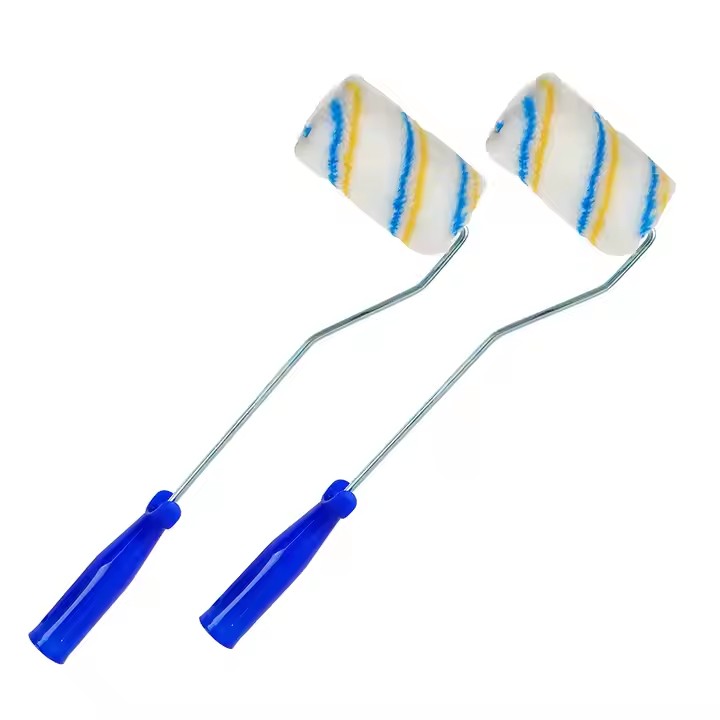
Mini Paint Roller
- Preparation
- Surface Cleaning: Ensure the surface is dry, free of dust, and smooth. Use sandpaper for uneven areas and a damp cloth to remove debris.
- Roller Preparation: For new rollers, rinse with water to remove loose fibers. Soak the roller cover in water or solvent (for oil-based paints) for 5–10 minutes, then spin dry to enhance paint absorption.
- Paint Mixing: Stir paint thoroughly to avoid sediment. Pour into a clean tray, ensuring the depth covers 1/3 of the roller.
- Application Method
- Dipping: Submerge half the roller into the paint, then roll it on the tray’s ridged section to distribute evenly. Avoid overloading to prevent drips.
- Rolling Technique:
- Start with a “W” or “M” pattern to cover large areas quickly, then fill in gaps with vertical/horizontal strokes.
- Maintain a 30–50% overlap between strokes for uniformity.
- Apply light pressure; let the roller’s weight do the work. Excessive force causes streaks.
- Edge Work: Use a 2–4-inch mini roller or angled brush for corners, trim, and ceilings.
- Finishing Touches
- Second Coat: Wait 2–4 hours (or per manufacturer instructions) for the first coat to dry. Lightly sand between coats for ultra-smooth finishes.
- Touch-Ups: Use a small roller or brush to correct uneven spots while the paint is still tacky.
Key Terms Explained
- Nap Length: The fiber thickness of the roller cover.
- Short nap (3–6mm): Smooth surfaces (e.g., drywall, metal).
- Medium nap (10–12mm): Semi-rough textures (e.g., stucco, wood).
- Long nap (20mm+): Rough surfaces (e.g., brick, concrete).
- Core Material: Plastic cores are lightweight; metal cores resist bending for heavy-duty use.
- Cage Frame: Adjustable frames with end caps to secure roller covers, preventing slippage.
- Extension Poles: Telescopic poles (1–3m) for high ceilings or walls, reducing ladder use.
Critical Precautions
- Ventilation: Work in well-ventilated areas, especially with oil-based paints, to avoid inhaling fumes.
- Protective Gear: Wear gloves, goggles, and a respirator mask. Cover floors with drop cloths.
- Avoid Overloading: Excess paint causes drips and uneven texture. Reload the roller every 1m².
- Temperature Control: Paint between 10–32°C. Extreme heat/cold affects drying time and adhesion.
- Storage: Clean rollers immediately after use. Wrap wet rollers in plastic wrap or foil for short-term storage (e.g., overnight). For long-term storage, dry thoroughly and store in a cool, dust-free area.
Note: The description might be incorrect, please contact us for confirmation.
Click here to contact us via whatsapp for details
Tag: Our other products