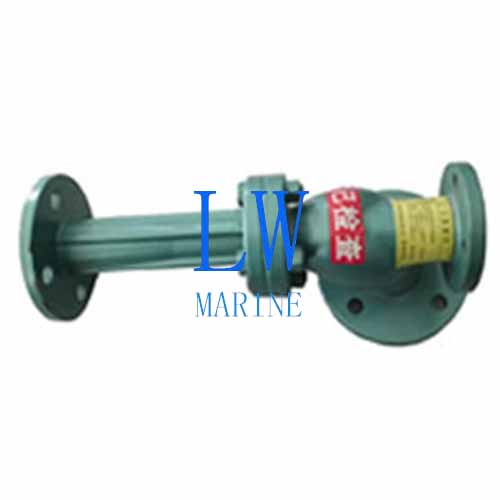
Ship Jet Pump
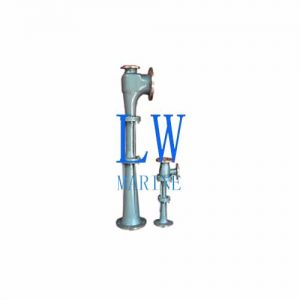
The CP(T) Series Ship Jet Pump is a highly reliable, maintenance-free fluid handling solution designed for the demanding environments of marine vessels and industrial plants. Utilizing the venturi principle, this jet pump (eductor) has no moving parts, offering exceptional longevity and the ability to handle challenging media that would quickly destroy conventional pumps.
With its unique design featuring a suction flange axis perpendicular to the pump body, the CP(T) series offers convenient installation in tight engine rooms and bilge spaces. It is inherently self-priming and capable of continuous, stable operation even when pumping mixtures of liquid and air, or liquid containing solids.
Versatile Applications Across Multiple Industries
While primarily designed for ship drainage systems (bilge and ballast), the CP(T) jet pump excels in a wide variety of industrial tasks, including:
-
Pumping fresh or seawater.
-
Mixing liquids in chemical processes.
-
Dredging river silt and sand.
-
Conveying powders and slurries.
-
Emptying flooded compartments or tanks.
Available in two main configurations—CP Series (Fixed Tilt Type) and CPT Series (Right Angle Type) —this pump can be tailored to fit the specific piping layouts and space constraints of any vessel or facility.
Key Features & Benefits
-
✅ No Moving Parts = Maximum Reliability: The absence of impellers, seals, or motors in the pump head means zero wear from rotating parts, resulting in an exceptionally long service life and minimal maintenance.
-
✅ Inherently Self-Priming: The jet pump design creates a strong vacuum, allowing it to lift liquids and handle air-entrained mixtures without the need for external priming systems.
-
✅ Handles Solids & Slurries: With no close-tolerance impellers to clog or damage, the pump can easily pass small solids, sand, silt, and other debris, making it ideal for river dredging and bilge pumping.
-
✅ Continuous & Stable Operation: Designed for uninterrupted duty, providing reliable performance for dewatering, transfer, and circulation tasks.
-
✅ Convenient Installation (Perpendicular Flange): The axis of the suction flange is perpendicular to the pump body, simplifying piping connections and allowing installation in confined spaces.
-
✅ Two Configurations for Optimal Fit:
-
CP Series (Fixed Tilt Type): Standard configuration for general drainage and transfer duties.
-
CPT Series (Right Angle Type): Compact right-angle design for installations with severe space limitations.
-
-
✅ Wide Range of Sizes: Available in models from CP5 to CP200 to suit various flow rate and pressure requirements.
Technical Specifications (Fixed Tilt Type – CP Series)
| Model | L (mm) | A (mm) | B (mm) | Q | Working Water Inlet Flange | Outlet Flange | Inlet Flange | |||||||||
|---|---|---|---|---|---|---|---|---|---|---|---|---|---|---|---|---|
| D1 | D2 | DN | n-d1 | D₂ | D₂1 | DN | n-d₂ | D₃ | D₃1 | DN₃ | n-d₃ | |||||
| CP5-0.7 | 470 | 139 | 190 | 39° | 105 | 73 | 25 | 4-M12 | 113 | 83 | 32 | 6-M15 | 135 | 103 | 50 | 6-φ15 |
| CP5-0.3 | 591 | 167 | 203 | 38° | 115 | 83 | 32 | 6-φ15 | 135 | 103 | 50 | 6-φ15 | 135 | 103 | 50 | 6-φ15 |
| CP10-0.7 | 550 | 142 | 194 | 39° | 115 | 83 | 32 | 6-φ15 | 135 | 103 | 50 | 6-φ15 | 135 | 103 | 50 | 6-φ15 |
| CP10-0.7K | 650 | 192 | 244 | 39° | – | – | G11/2 | 6-φ15 | – | – | G2 | 6-φ15 | – | – | G2 | – |
| CP10-0.3 | 723 | 170 | 226 | 38° | 125 | 93 | 40 | 6-φ15 | 155 | 123 | 65 | 6-φ15 | 155 | 123 | 65 | 6-φ15 |
| CP15-0.5 | 751 | 176 | 242 | 39° | 135 | 103 | 50 | 6-φ15 | 170 | 138 | 80 | 8-φ15 | 155 | 123 | 65 | 6-φ15 |
| CP15-0.3 | 804 | 241 | 220 | 39° | 135 | 103 | 50 | 6-φ15 | 170 | 138 | 80 | 8-φ15 | 155 | 123 | 65 | 6-φ15 |
| CP20-0.7 | 809 | 175 | 220 | 39° | 135 | 103 | 50 | 6-φ15 | 170 | 138 | 80 | 8-φ15 | 155 | 123 | 65 | 6-φ15 |
| CP20-0.7K | 909 | 225 | 270 | 39° | – | – | G2 | – | – | – | G3 | – | – | – | G1½ | – |
| CP20-0.3 | 866 | 195 | 230 | 38° | 135 | 103 | 50 | 6-φ15 | 170 | 138 | 80 | 8-φ15 | 155 | 123 | 65 | 6-φ15 |
| CP30-0.7 | 795 | 191 | 228 | 39° | 135 | 103 | 50 | 6-φ15 | 155 | 123 | 65 | 8-φ15 | 170 | 138 | 80 | 8-φ15 |
| CP30-0.3 | 1113 | 267 | 319 | 38° | 155 | 123 | 65 | 6-φ15 | 190 | 138 | 100 | 8-φ15 | 190 | 158 | 100 | 8-φ15 |
| CP50-0.7 | 982 | 238 | 270 | 39° | 155 | 123 | 65 | 6-φ15 | 170 | 138 | 80 | 8-φ15 | 190 | 158 | 100 | 8-φ15 |
| CP50-0.3 | 1390 | 328 | 270 | 39° | 170 | 138 | 80 | 8-φ15 | 215 | 183 | 125 | 10-φ15 | 215 | 183 | 125 | 10-φ15 |
| CP100-0.7 | 1293 | 198 | 216 | 60° | 170 | 138 | 80 | 8-φ15 | 215 | 183 | 125 | 10-φ15 | 240 | 208 | 150 | 12-φ15 |
| CP100-0.3 | 1677 | 365 | 415 | 39° | 215 | 183 | 125 | 10-φ15 | 240 | 208 | 150 | 12-φ15 | 270 | 238 | 175 | 12-φ15 |
| CP200-0.7 | 1916 | 233 | 260 | 60° | 215 | 183 | 125 | 10-φ15 | 295 | 264 | 200 | 12-φ15 | 295 | 264 | 200 | 12-φ15 |
How It Works: The Venturi Principle
The CP(T) jet pump operates using a motive fluid (usually water from a service pump) passed through a tapered nozzle inside the pump. This creates a high-velocity jet and a vacuum (suction) in the chamber around it. This vacuum draws the suction fluid (bilge water, slurry, etc.) into the pump, where it mixes with the motive fluid and is discharged against a higher head.
Applications
-
Marine: Bilge drainage, ballast stripping, tank cleaning, emergency dewatering.
-
Dredging: Sand and silt removal from rivers, harbors, and canals.
-
Chemical Processing: Mixing and blending of liquids, conveying chemical powders.
-
Water & Wastewater: Pumping well water, transferring sludge, aerating lagoons.
-
Construction & Mining: Dewatering excavations, pumping abrasive slurries.
-
Building Materials: Conveying cement, fly ash, and other powders.
Frequently Asked Questions (FAQs)
Q1: How does a jet pump work without moving parts?
A: It works on the Venturi principle. A motive fluid (like pressurized water from a separate pump) is forced through a tapered nozzle inside the jet pump. This creates a high-velocity stream and a low-pressure area (vacuum) in the suction chamber. The vacuum draws the target fluid in, where it mixes with the motive fluid and is carried out through the discharge. No impellers, gears, or motors are inside the pump body itself.
Q2: What is the difference between the CP Series and the CPT Series?
A: The difference is in the physical configuration of the flanges:
-
CP Series (Fixed Tilt Type): The suction and discharge flanges are oriented at a fixed angle (typically 38°-60° as noted in the tables). This is a robust, general-purpose design.
-
CPT Series (Right Angle Type): The flanges are oriented at a 90-degree angle to each other. This compact, right-angle design is ideal for installations with very tight space constraints where piping must turn immediately.
Q3: What does the model number (e.g., CP10-0.7) signify?
A: While specific interpretations can vary by manufacturer, the model number typically indicates:
-
CP / CPT: The series and type.
-
Number (e.g., 10): Often relates to the size or nominal flow capacity of the pump.
-
Second Number (e.g., 0.7): Usually indicates the pressure ratio or a specific performance characteristic (like the motive fluid pressure requirement or the suction lift capability). Refer to our performance curves for precise details.
Q4: Can I pump abrasive materials like sand with this pump?
A: Yes, absolutely. Because there are no moving parts or close tolerances inside the pump, it is exceptionally tolerant of abrasive solids like sand, silt, and small gravel. This makes it an ideal choice for river dredging and pumping debris-laden bilge water where a conventional centrifugal pump would suffer rapid wear or clogging.
Q5: Does the CP(T) jet pump require a separate pump to operate?
A: Yes. A jet pump is not a prime mover; it requires a source of motive fluid under pressure. This is typically supplied by a separate, dedicated centrifugal pump (often called the “motive pump”). The jet pump uses the energy from this motive flow to create suction and move the target fluid.
Q6: What are the advantages of using a jet pump for ship drainage?
A: For shipboard use, the key advantages are:
-
Reliability: No moving parts to fail.
-
Self-Priming: Can handle air-mixed bilge water without losing prime.
-
Solids Handling: Can pass debris that would clog a standard pump.
-
Compact Size: Can be installed in awkward spaces.
-
Safety: Can be used to pump flammable or hazardous fluids as there is no electrical or rotating equipment inside the pump body.
Attention please: The description was copied from different cooperating manufacturers. The description may be different with the goods, please check with us when order.
Tag: Our other products
Click here to contact us via whatsapp