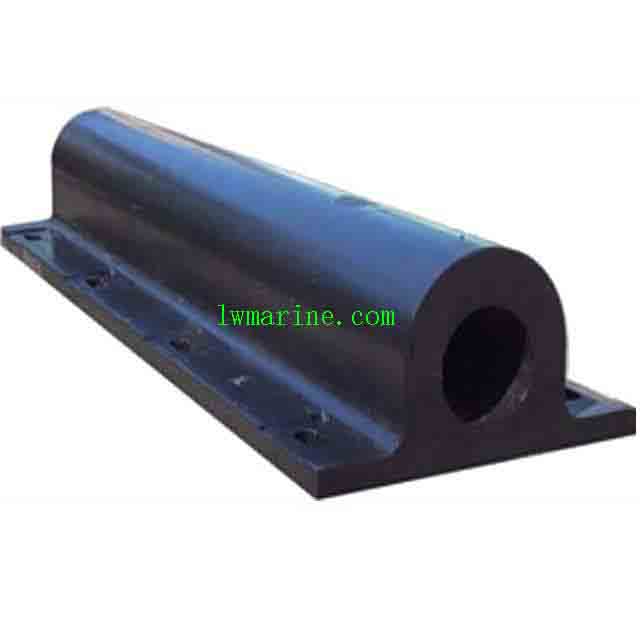
Rubber Dock Fender DD GD Type
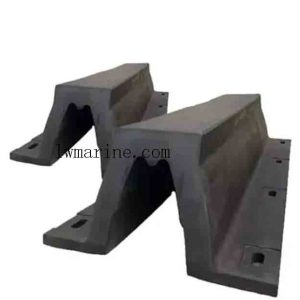
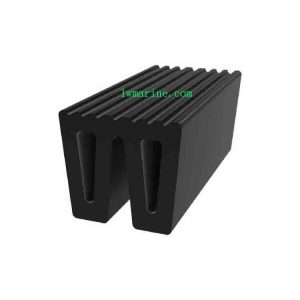
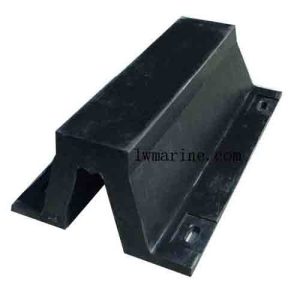
Our GD Type Rubber Fenders are precision-engineered to provide high energy absorption while maintaining a low reaction force, making them the ideal choice for protecting docks and vessels during berthing operations. Their robust construction and unique, proven design ensure reliable performance across a wide spectrum of marine applications, from busy commercial ports to specialized bulk cargo facilities.
Designed for demanding environments, these dock fenders effectively reduce the risk of damage to both ship hulls and quay structures. The GD series offers high strength in installation and is built for a long service life, ensuring your waterfront infrastructure remains protected for years to come. With a focus on easy installation and minimal maintenance, they provide a cost-effective and efficient solution for port and harbor fendering systems.
Key Features of GD Type Rubber Fender
-
✔ High Energy Absorption: The unique geometry of the GD fender is optimized to absorb significant kinetic energy from berthing vessels, providing superior protection.
-
✔ Low Reaction Force: Despite its high energy capacity, it exerts a low reaction force on the vessel’s hull, minimizing stress on both the ship and the dock structure.
-
✔ Ideal for Framework Docks: Specifically designed for use on docks of framework type, where its mounting configuration provides a secure and stable fendering solution.
-
✔ Durable & Long-Lasting: Built from high-quality marine rubber compounds and reinforced steel components, ensuring high strength in installation and exceptional durability.
-
✔ Minimal Maintenance: The robust, simple design requires very little upkeep, reducing long-term operational costs.
Applications of GD Type Rubber Fender
GD Type Rubber Fenders are designed for high energy absorption and low reaction force, making them suitable for a wide range of marine applications. They are commonly used in:
-
Commercial Ports: Protecting main berths and quay walls.
-
Container Terminals: Where large vessels require reliable, high-performance fendering.
-
Bulk Cargo Facilities: For the safe berthing of bulk carriers and ore ships.
-
Ferry Terminals: Withstanding frequent and diverse berthing impacts.
-
Shipyards & Repair Facilities: Providing safe lay-up and outfitting berths.
Their robust construction ensures long-term performance, even in harsh marine conditions involving constant wave action, tidal changes, and potential impacts, all with minimal maintenance requirements.
GD Type Rubber Fender Parameters & Dimensions
Below are the key dimensions for our range of GD fenders. The model designation indicates the height (H) and length (L). For example, GD280HX1000L has a height of 280mm and a length of 1000mm. Please contact us for custom sizes or specific engineering data.
| Model | M (Bolt Size) | I (mm) | D (mm) | H (mm) | J (mm) |
|---|---|---|---|---|---|
| GD280HX1000L | M30 | 40 | 540 | 280 | 300 |
| GD280HX1500L | M30 | 40 | 540 | 280 | 300 |
| GD280HX2000L | M30 | 40 | 540 | 280 | 300 |
| GD280HX2500L | M30 | 40 | 540 | 280 | 300 |
| GD280HX3000L | M30 | 40 | 540 | 280 | 300 |
| GD300HX1000L | M36 | 40 | 600 | 300 | 360 |
| GD300HX1500L | M36 | 40 | 600 | 300 | 360 |
| GD300HX2000L | M36 | 40 | 600 | 300 | 360 |
| GD300HX2500L | M36 | 40 | 600 | 300 | 360 |
| GD300HX3000L | M36 | 40 | 600 | 300 | 360 |
(Note: Please verify model “GD280HX3000L” in the last row of the original data as the M dimension changes to M36, suggesting it belongs to the GD300 series. It has been listed here as per the provided data.)
Frequently Asked Questions (FAQs)
Q1: What is the main advantage of a fender with “high energy absorption and low reaction force”?
A: This combination is the ideal performance characteristic for a marine fender. High energy absorption means the fender can effectively stop a moving vessel by absorbing its kinetic energy. Low reaction force means that while absorbing that energy, the fender does not transmit excessive force back to the vessel’s hull or the dock structure. This protects both the ship from hull damage and the quay from structural stress, making it a very efficient and safe dock fender.
Q2: What does “dock of framework type” mean, and why is this fender suitable?
A: A dock of framework type typically refers to a berthing structure built with a supporting framework of piles and beams, rather than a solid, continuous concrete wall (like a gravity quay). The GD fender’s design and mounting configuration are particularly well-suited for this type of structure because it can be securely attached to the framework members and effectively distribute the berthing loads into the structure.
Q3: How do I select the correct size GD fender for my port?
A: Selecting the correct fender size is a critical engineering task. It depends on several factors, including the displacement (size) of the largest vessel using the berth, the vessel’s berthing velocity and angle, the tidal range, and the structure’s allowable hull pressure. The energy absorption and reaction force data for each fender size (like GD280 or GD300) must be matched to the calculated berthing energy of the design vessel. We recommend consulting with a marine civil engineer or our technical department for proper selection.
Q4: What maintenance is required for these rubber fenders?
A: One of the key benefits of the GD Type is its minimal maintenance requirement. The primary upkeep involves periodic visual inspections to check for any significant cuts, abrasion, or signs of rubber degradation from UV exposure. It is also important to ensure that the mounting bolts (M30 or M36) remain tight and free from corrosion. Regular cleaning to remove marine growth is not essential for performance but can extend the fender’s life.
Q5: What are the standard lengths available for GD fenders?
A: Based on the parameter table, GD fenders are commonly available in standard lengths of 1000mm, 1500mm, 2000mm, 2500mm, and 3000mm for a given height (e.g., 280mm or 300mm). This allows you to create a continuous fendering line along the dock by mounting multiple units end-to-end. Custom lengths can also be manufactured to meet specific project requirements.
Q6: Are these fenders suitable for use in all climates, including tropical or freezing conditions?
A: Yes, the rubber compound used in our marine fenders is formulated to perform across a wide range of temperatures and environmental conditions. It is designed to remain flexible and resilient in cold weather and to resist degradation from UV radiation and ozone in hot, sunny climates. For extreme environments, we can discuss specific rubber compounds to ensure optimal long-term performance.
Attention please: The description was copied from different cooperating manufacturers. The description may be different with the goods, please check with us when order.
Tag: Our other products
Click here to contact us via whatsapp