Propeller Shaft for Marine Propulsion Systems
Product Definition and Extensive Marine Applications
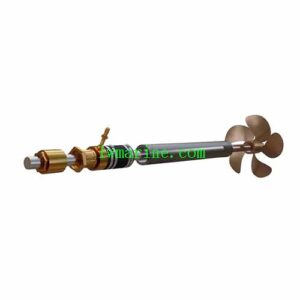
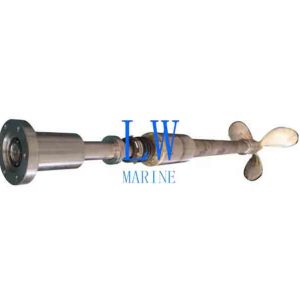
The propeller shaft, also commonly referred to as the screw shaft, stern shaft, or tail shaft, serves as the critical link between a marine vessel’s propulsion system and its propeller. It is an essential component that ensures the efficient transfer of power from the engine to the propeller, enabling the vessel to move through the water. Our heavy – duty forged propeller shafts are meticulously engineered to establish robust and reliable connections within the marine propulsion system.
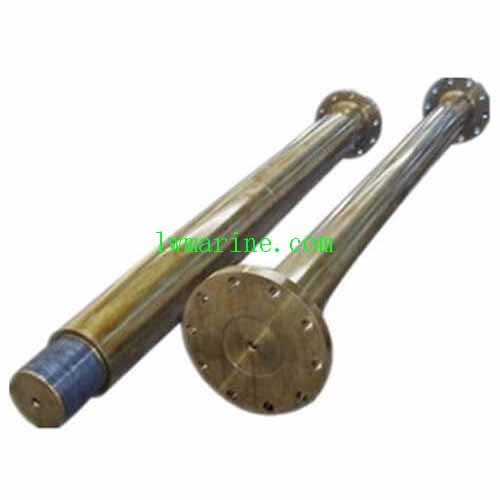
- Flanged End for Stable Power Transfer: The flanged end of our propeller shafts is specifically designed to couple seamlessly with the intermediate shaft. This design ensures a stable and reliable transfer of power from the engine to the propeller, minimizing power losses and enhancing overall propulsion efficiency. It is an ideal solution for marine vessels that require consistent and high – performance propulsion, such as large cargo ships transporting goods across long distances.
- Tapered End for Precise Propeller Attachment: The tapered end is crafted with precision to securely fasten the ship’s propeller. This precise fit not only reduces vibrations during operation but also improves the overall propulsion efficiency of the vessel. High – speed passenger ferries, which rely on smooth and efficient propulsion for a comfortable and timely journey, can greatly benefit from this feature.
Our propeller shafts are suitable for a wide range of marine vessels, including but not limited to large cargo ships, ocean – going tankers, high – speed passenger ferries, and even offshore support vessels. In all these applications, reliable and efficient propulsion is crucial for ensuring safe and timely voyages, and our propeller shafts are designed to meet these demanding requirements.
Advanced Capabilities for Superior Quality
- Comprehensive Technical Specifications
- Length: Our propeller shafts are available in a length range of 3,000 – 20,000 mm. This wide range allows them to fit various vessel sizes and propulsion system configurations, providing flexibility for different marine applications. Whether it’s a small coastal vessel or a large ocean – going ship, we have the right propeller shaft to meet its needs.
- Weight: With a weight range of 8,000 – 80,000 kg, our propeller shafts are clearly heavy – duty components. They are designed to withstand significant loads encountered during vessel operation, ensuring long – term reliability and durability.
- Design Types: We offer a variety of design types, including flanged, stepped, tapered, and pull rod. This flexibility enables us to meet different installation and operational requirements of marine vessels. For example, a stepped design may be more suitable for vessels with specific space constraints, while a pull rod design can offer certain advantages in terms of ease of installation and maintenance.
- Material Grades: Our propeller shafts are made from carbon steel and low – alloy steel. These materials provide a balance of strength, durability, and cost – effectiveness. Carbon steel offers good strength and is relatively inexpensive, while low – alloy steel enhances the mechanical properties of the shaft, such as hardness and fatigue resistance, without significantly increasing the cost.
- Rigorous Quality Assurance Process
- Steel Melting Composition Analysis: We precisely control the chemical composition of the steel during the melting process. This ensures consistent material properties throughout the propeller shaft, which is crucial for its performance and reliability. By maintaining the right balance of elements, we can guarantee that the shaft will have the desired strength, toughness, and corrosion resistance.
- Precision Forging under Hydraulic Press: The forging process is carried out under a hydraulic press to create a dense and uniform structure in the propeller shaft. This enhances the shaft’s strength and fatigue resistance, allowing it to withstand the high loads and stresses encountered during vessel operation. Precision forging also ensures that the shaft has accurate dimensions, which is essential for proper installation and coupling with other components.
- Quenching & Tempering Heat Treatment: After forging, the propeller shaft undergoes quenching and tempering heat treatment. This process optimizes the mechanical properties of the shaft, improving its hardness, toughness, and wear resistance. Quenching rapidly cools the shaft to increase its hardness, while tempering reduces the brittleness and improves the toughness, making the shaft more durable and reliable.
- Non – Destructive Examination (NDE):
- Ultrasonic Testing (UT): We use ultrasonic testing to detect internal defects such as cracks or inclusions in the propeller shaft. These defects could compromise the shaft’s integrity and lead to failure during operation. By identifying and addressing these issues early, we can ensure the safety and reliability of the shaft.
- Magnetic Particle Inspection (MPI): Magnetic particle inspection is used to identify surface and near – surface defects in the propeller shaft. This helps us ensure that the shaft’s surface quality meets the highest standards, as surface defects can also affect the shaft’s performance and durability.
- Mechanical Property Validation: We conduct tensile, impact, and hardness tests on the propeller shafts to verify that they meet the specified mechanical requirements. These tests provide objective data on the shaft’s strength, toughness, and hardness, ensuring that it can withstand the demanding conditions of marine operation.
Certifications and Compliance with International Marine Industry Standards
Classification Society Approvals
Our propeller shafts have obtained approvals from leading classification societies around the world, including LR (Lloyd’s Register), DNV (Det Norske Veritas), ABS (American Bureau of Shipping), GL (Germanischer Lloyd), BV (Bureau Veritas), KR (Korean Register of Shipping), NK (Nippon Kaiji Kyokai), RINA (Registro Italiano Navale), and CCS (China Classification Society). These approvals are a testament to our commitment to meeting international marine safety and quality standards. By choosing our propeller shafts, marine vessel operators can have confidence in the safety and reliability of their propulsion systems.
Testing Standards
- IACS UR W7/W8 (Shaft Forgings): Our shaft forgings comply with the strict requirements set by the International Association of Classification Societies for shaft – related components. This ensures that our propeller shafts are of the highest quality and can meet the demanding requirements of the marine industry.
- ASTM A668 / EN 10293 (Material): The materials used in our propeller shafts meet the relevant industry standards for chemical composition and mechanical properties as specified by ASTM A668 and EN 10293. This guarantees that our shafts are made from high – quality materials that can withstand the harsh marine environment.
Detailed Material and Mechanical Property Information for Stainless Steel Stern Shaft and Propeller Shaft
Chemical Composition (%)
| C | Si | Mn | P | S | Cr | Ni |
|---|---|---|---|---|---|---|
| ≤0.07 | ≤1.00 | ≤2.00 | ≤0.35 | ≤0.30 | 17.00 – 19.00 | 8.00 – 11.00 |
This specific chemical composition provides excellent corrosion resistance, making the stainless steel propeller shafts highly suitable for marine environments with high salt content. Vessels operating in coastal areas or in the open ocean, where exposure to saltwater is constant, can benefit from the long – lasting corrosion protection offered by these shafts.
Mechanical Properties
| Tensile Test | Hardness Test |
|---|---|
| o b (MPa) | o s (MPa) |
| ≥520 | ≥205 |
These mechanical properties ensure that the propeller shafts can withstand the high loads and stresses encountered during vessel operation. Whether it’s the force generated by the propeller during acceleration or the constant load during cruising, our shafts are designed to perform reliably.
Yield Value Strength at High Temperature
| Nominal Thickness (mm) | During the following temperature (°C), o 0.2 (MP) should be not less than |
|---|---|
| 2 – 60 | 171 (at 100°C) |
This data shows the shaft’s ability to maintain its strength at elevated temperatures, which is crucial for vessels operating in warm climates or under high – load conditions. For example, vessels operating in tropical regions or those carrying heavy loads may experience higher operating temperatures, and our propeller shafts can still perform effectively under these conditions.
Allowable Stress of Steel Forgings
| Nominal Thickness (mm) | During the following temperature (°C), the allowable stress should be (MPa) |
|---|---|
| 2 – 60 | 137 (at ≤20°C), 114 (at higher temperatures as specified) |
This information helps in determining the safe operating limits of the propeller shafts under different temperature conditions, ensuring the safety and reliability of the vessel’s propulsion system. By knowing the allowable stress, vessel operators can avoid overloading the shafts and prevent potential failures.
Note: The description might be incorrect, please contact us for confirmation.
Click here to contact us via whatsapp for details
Tag: Our other products