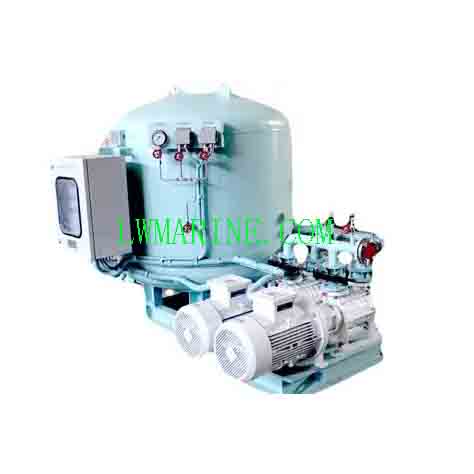
Marine Hydrophore
We offer three distinct series within the ZYG Marine Hydrophore Unit range, each designed to optimize space and performance for different vessel layouts.
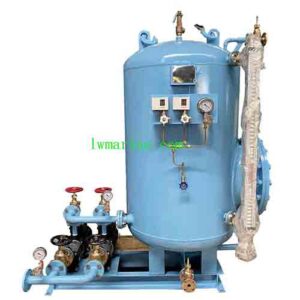
1. ZYGH Series (Vertical Pumps – Compact Footprint)
The ZYGH model is the ultimate space-saving solution. It utilizes two CLH vertical centrifugal pumps mounted directly on the side of the pressure tank. This unique configuration dramatically reduces the floor space (footprint) required, making it ideal for engine rooms or compartments where every square meter counts. The pressure tank provides both water storage and the structural mounting point for the pumps and controls.
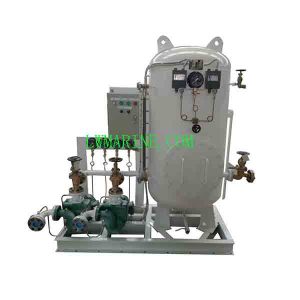
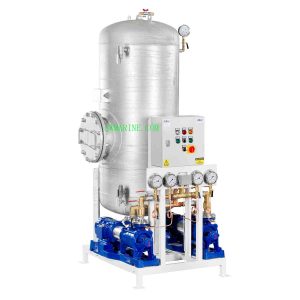
2. ZYGX Series (Horizontal Pumps – Skid-Mounted)
The ZYGX model features two robust CWX horizontal self-priming centrifugal pumps. In this configuration, the pressure tank, pumps, control panel, and all associated piping are mounted on a heavy-duty structural steel skid. The skid is grit-blasted to Sa2.5 standard and coated with a marine-grade epoxy paint for superior corrosion protection. This design allows for easy lifting, transport, and positioning within the vessel during installation.
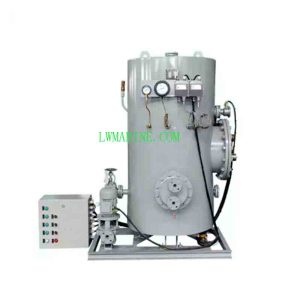
3. ZYGW Series (Small Capacity – Compact Skid)
The ZYGW model is similar in design to the ZYGX (skid-mounted with horizontal pumps) but utilizes WZ horizontal self-priming centrifugal pumps. This series is specifically designed for applications with smaller pump capacities and reduced tank volumes, making it ideal for smaller workboats, yachts, or auxiliary systems where space and demand are limited.
Technical Overview & Specifications
| Feature | Description |
|---|---|
| System Name | Marine Hydrophore Unit / Pressure Water Tank System |
| Media | Fresh Water, Sea Water |
| Pump Types | CLH Vertical Centrifugal (ZYGH) / CWX Horizontal Self-Priming (ZYGX) / WZ Horizontal Self-Priming (ZYGW) |
| Configuration | Duplex (Two Pumps) for duty/standby operation |
| Control | Automatic pressure switch & electronic control panel |
| Monitoring | Water quality sensors & consumption counters (optional) |
| Installation | Single-side connections; Skid-mounted or Tank-mounted |
| Surface Preparation | Grit blasting (Sa2.5) + Epoxy paint for marine service |
| Compliance | Designed for classification society requirements (upon request) |
(Note: Specific capacity, tank volume, and pump performance data is available in the detailed ZYG Marine Hydrophore Unit Catalogue. Please contact us for selection assistance.)
Operating Guidelines: Daily Check & System Start-Up
Proper maintenance ensures the longevity and reliability of your hydrophore system.
1. Daily Check & Flushing of the Water Level Gauge
To ensure accurate water level readings inside the pressure tank:
-
Close the valves on the air side of the gauge, and open the flush valve to clean the water connection pipes.
-
Open the valves on the air side to flush the compressed air connection pipes.
-
Close the flush valve and reopen the water side valves. Verify the water level returns to its normal operating position.
2. Procedure for Charging Compressed Air into the Tank
Maintaining the correct air cushion is vital for proper system operation:
-
Manually start one service pump to deliver water into the tank until the system reaches the preset working pressure. Close the outlet valve to temporarily isolate the supply.
-
Adjust the external compressed air source to a pressure 0.1 MPa higher than the tank’s working pressure.
-
Open the air charge valve to introduce compressed air into the tank.
-
Open the drain valve slightly to release any excess water until the pressure stabilizes at the working pressure and the water level reaches the “full” mark on the gauge. Close the air charge and drain valves.
-
If too much air is charged, it can be released via the relief valve on top of the tank.
-
Return all valves to their normal operating positions and set the pump control to “Automatic.”
(For detailed instructions, schematics, and part numbers, please refer to the official ZYG Marine Hydrophore Unit Catalogue.)
Frequently Asked Questions (FAQ)
1. What is a Marine Hydrophore Unit and how does it work?
A Marine Hydrophore Unit (or pressure water tank) is an automatic system used to maintain constant water pressure in a ship’s plumbing system. It consists of a pressurized tank containing both water and compressed air. When a tap is opened, the compressed air pushes water out of the tank. When the pressure drops to a preset low point, a pressure switch starts a pump to refill the tank and re-pressurize the air. When the pressure reaches the high limit, the pump stops. This cycle ensures consistent flow without the pump running constantly.
2. Why choose a vertical pump system (ZYGH) over a horizontal skid system (ZYGX)?
The choice depends on available space.
-
ZYGH (Vertical Pumps) is the best choice when deck space is extremely limited. By mounting the pumps directly onto the tank, the system’s footprint is minimized, allowing it to fit into tight corners or narrow passageways.
-
ZYGX (Horizontal Skid) is preferred when space is less critical, but stability and ease of rigging are priorities. The heavy-duty skid provides a very stable base, makes lifting and positioning with crane slings easier, and keeps all components perfectly aligned.
3. What does “single-side connection” mean for installation?
In traditional systems, piping connections might be located on multiple sides of the unit, requiring space for access all around. Single-side connections means all water inlet, outlet, and drain connections are grouped together on one face of the unit. This allows the unit to be installed with its back directly against a bulkhead or in a corner, saving valuable engine room floor space and simplifying the piping layout.
4. What maintenance is required for the compressed air charge in the tank?
The air cushion in the hydrophore tank is critical for proper operation and can be absorbed by the water over time (lost). Crew members should periodically check the water level sight glass. If the water level is too high when the system is at rest (pumps off), it indicates the air charge is low. In this case, you must follow the “compressed air charging” procedure to restore the correct air-to-water ratio, ensuring the pumps don’t short-cycle (start and stop too frequently).
5. Can the ZYG system handle seawater, or is it only for fresh water?
Yes, the ZYG series is designed for versatility. Specific models and pump materials can be specified to handle both fresh water and seawater. For seawater applications, components such as the pumps, piping, and fittings are selected with enhanced corrosion resistance (e.g., bronze or suitable stainless steel) to withstand the saline environment. Please specify your required media (fresh or seawater) when requesting a quote.
Attention please: The description was copied from different cooperating manufacturers. The description may be different with the goods, please check with us when order.
Tag: Our other products
Click here to contact us via whatsapp