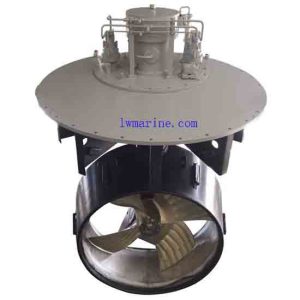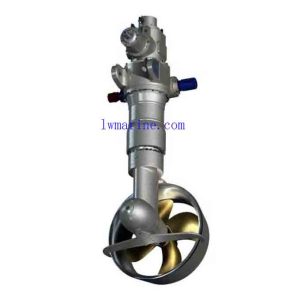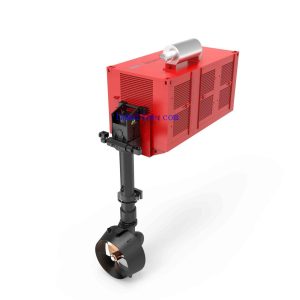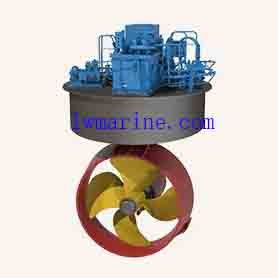
Marine Hydraulic Azimuth Thruster
The Hydraulic Azimuth Thruster is a highly adaptable marine propulsion solution that leverages the power of a hydraulic motor to drive the propeller, offering unparalleled control and maneuverability. By separating the prime mover (engine) from the propulsion unit, this system provides fully proportional propeller speed control in both forward and reverse, all while the main engine runs at a constant, optimal speed.
This design is particularly advantageous for vessels requiring precise maneuvering, shallow water operation, or quick conversion from unpowered platforms. Widely used in yachts, open body mud boats, and simple engineering vessels, the hydraulic azimuth thruster delivers robust thrust and exceptional reliability in a compact, easy-to-maintain package.
Ideal for Vessel Conversion & Shallow Water Operations
One of the standout benefits of this system is its suitability for retrofitting. A simple barge or unpowered vessel can be converted into a self-propelled craft in as little as a few hours to less than a week, all without the need for complex and expensive hull modifications.
Furthermore, the hydraulic drive system is exceptionally well-suited for shallow, brown water applications (rivers, mud flats, estuaries). With no exposed drive shafts or vulnerable underwater gearing, it is highly tolerant of debris in the water and can operate safely in shallow bottoms where conventional propulsion would risk damage.
Key Features & Benefits
-
✅ Hydraulic Drive Simplicity: The propeller is driven directly by a hydraulic motor, eliminating the need for complex gearboxes, long shaft lines, and bulky rudders.
-
✅ Precise Proportional Control: Offers smooth, infinitely variable speed control from 0 to full power in both forward and reverse, with the prime mover running at constant RPM for optimal efficiency.
-
✅ Rapid Vessel Conversion: Transform a dumb barge or unpowered platform into a self-propelled unit in days, not weeks, with minimal structural work.
-
✅ Shallow Water & Debris Tolerance: Ideal for brown water operations; the protected hydraulic motor and propeller design are more resilient to floating debris and bottom contact.
-
✅ Compact & Space-Saving: The thruster unit itself is compact, freeing up valuable deck space and internal volume compared to traditional inboard engine installations.
-
✅ Low Noise & Vibration: Hydraulic drives are inherently smoother and quieter than mechanical drives, enhancing crew and passenger comfort.
-
✅ Easy Installation & Maintenance: Simplified installation with fewer alignment challenges. Maintenance is straightforward, often confined to the hydraulic power unit and motor seals.
-
✅ Cost-Effective: Lower installation costs, reduced need for hull modifications, and robust, simple design lead to a lower total cost of ownership.
Technical Specifications
| Parameter | Detail |
|---|---|
| Product Type | Hydraulic Azimuth Thruster |
| Power Range | 50 HP to 500 HP (37 kW to 373 kW) |
| Propeller Diameter | 620 mm – 1300 mm (Depending on model) |
| Thrust Range | Up to 7.7 tons (Depending on model and power) |
| Drive Type | Direct Hydraulic Motor Drive |
| Control | Fully Proportional (Forward/Neutral/Reverse) |
| Installation | Stern / Transom Mount (Typical) |
| Ideal Applications | Yachts, Mud Boats, Barges, Workboats, Pontoons |
Model Selection & Performance Data
Select the ideal thruster based on your vessel’s required power and thrust.
| Model | Power Rating (HP) | Propeller Diameter (mm) | Thrust (tons) |
|---|---|---|---|
| HP50 | 0 – 50 | 620 | 0 – 0.7 |
| HP100 | 50 – 100 | 830 | 1.0 – 1.4 |
| HP200 | 100 – 200 | 950 | 1.5 – 3.2 |
| HP300 | 200 – 300 | 1000 | 3.4 – 4.4 |
| HP400 | 300 – 400 | 1180 | 4.7 – 6.2 |
| HP500 | 400 – 500 | 1300 | 6.5 – 7.7 |
Applications
The versatility of the Hydraulic Azimuth Thruster makes it the preferred choice for a wide variety of vessels:
-
Yachts & Pleasure Craft: Provides exceptional maneuverability for docking and silent, vibration-free cruising.
-
Open Body Mud Boats & Shallow Draft Vessels: Designed to operate in challenging environments with mud, weeds, and debris without clogging or damage.
-
Simple Engineering Ships & Workboats: Ideal for dredging support, pipe lay barges, and construction vessels that require frequent repositioning.
-
Barge Conversion: The perfect solution for adding self-propulsion to dumb barges, hopper barges, and pontoons for inland waterway transport.
-
Fish Farms & Aquaculture: Provides quiet, reliable propulsion for feed barges and work platforms.
Frequently Asked Questions (FAQs)
Q1: What is the main advantage of a hydraulic azimuth thruster over a conventional propeller shaft system?
A: The main advantages are flexibility and simplicity of installation. A hydraulic thruster eliminates the need for a long, rigid propeller shaft, complex gearboxes, and precise alignment with the engine. The engine can be located anywhere on the vessel, connected only by hydraulic hoses to the thruster unit. This makes it ideal for retrofits, shallow-draft vessels, and applications where space is at a premium.
Q2: How does the “fully proportional speed control” work?
A: In a hydraulic system, the speed and direction of the hydraulic motor (and thus the propeller) are controlled by varying the flow and direction of hydraulic fluid from the pump. This is typically done with a single control lever. Regardless of the thruster speed, the prime mover (diesel engine or electric motor) driving the hydraulic pump can run at a constant, fuel-efficient RPM. This provides smooth, precise control from a creep speed to full power without clutching or gear changes.
Q3: Can I install this thruster on my existing barge, and how long does it take?
A: Yes, this is one of the primary applications. A hydraulic azimuth thruster is ideal for barge conversion. Since no major hull modifications are required to accommodate a shaft log or rudder, the installation is typically a matter of fabricating a strong mounting bracket on the transom, connecting the hydraulic hoses, and installing the power pack. A simple conversion can often be completed in a few days or less.
Q4: What maintenance is required for a hydraulic thruster?
A: Maintenance is generally straightforward and less frequent than with mechanical drives. Key areas include:
-
Hydraulic Fluid: Check and change the fluid in the power pack per the manufacturer’s schedule.
-
Hoses & Fittings: Regularly inspect for leaks, chafing, or damage.
-
Motor Seals: Ensure the propeller shaft seal on the hydraulic motor is not leaking.
-
Propeller: Inspect for damage from debris.
The lack of a gearbox and long shaft eliminates associated maintenance tasks.
Q5: What does “brown water application” mean?
A: “Brown water” is a naval/marine term referring to shallow, turbid (murky) water environments, typically rivers, estuaries, mangroves, and coastal swamps. These areas often contain high amounts of sediment, floating debris, and have shallow, uneven bottoms. Our hydraulic thruster is well-suited for these conditions because the propeller is robust and the absence of a long, vulnerable shaft and rudder assembly reduces the risk of damage from groundings or debris strikes.
Q6: How do I choose between the HP50 and HP500 model?
A: The choice depends on your vessel’s size, displacement, and desired speed.
-
HP50-HP200: Suitable for smaller vessels like yachts, small workboats, and pontoons.
-
HP300-HP500: Designed for larger vessels, heavy barges, mud boats, and applications requiring significant bollard pull for towing or station-keeping.
Consult with our marine engineers, providing your vessel’s details, to select the optimally sized model.
Attention please: The description was copied from different cooperating manufacturers. The description may be different with the goods, please check with us when order.
Tag: Our other products
Click here to contact us via whatsapp