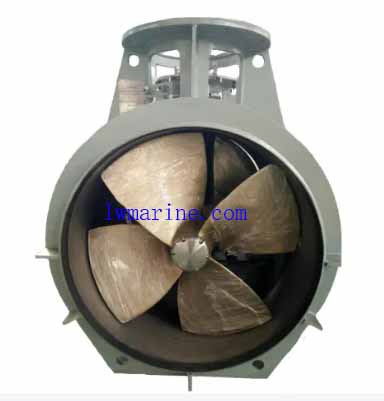
Electric Thrusters
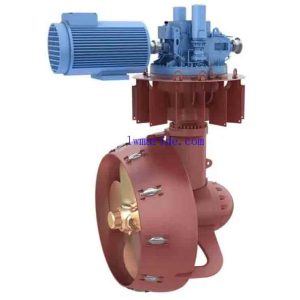
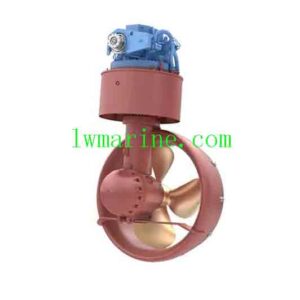
Revolutionize your vessel’s performance with our Electric Azimuth Thrusters, a state-of-the-art, all-in-one propulsion solution designed for the demanding world of modern marine operations. Seamlessly blending high-efficiency marine propulsion with an eco-friendly electric drive system, these thrusters serve as both main and auxiliary propulsion units, while excelling in Dynamic Positioning (DP) applications.
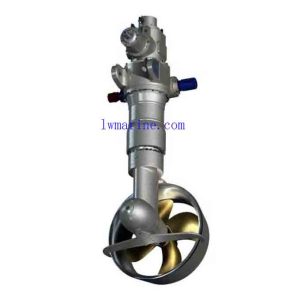
Specifically engineered for tugs, ferries, barges, offshore support vessels, and any vessel requiring precise station-keeping, our system offers unparalleled thrust vectoring capabilities through full 360° steering functionality. Available in both Z-drive and L-drive configurations, this azimuthing thruster provides the ultimate control, whether you are navigating through congested harbors, maneuvering in tight waterways, or maintaining a fixed position in challenging sea conditions.
A Sustainable Powerhouse for the Modern Fleet
With an input power range spanning 150KW to 4500KW, our electric thrusters enable zero-emission operation when paired with onboard battery systems or green shore power. This significantly reduces your vessel’s environmental footprint and ensures compliance with stringent emission regulations in Emission Control Areas (ECAs) and eco-sensitive zones, making it the ideal choice for forward-thinking, eco-conscious vessel operators.
Key Features & Significant Benefits
-
Eco-Friendly Electric Drive System (150–4500KW): Embrace sustainable operations with a system designed for a low-carbon future. The all-electric drive eliminates local exhaust pollution, dramatically reduces noise and vibration, and opens the door to zero-emission vessel operation.
-
High-Efficiency Propulsion Design: Maximize thrust while minimizing energy bills. Our thrusters feature a large-diameter, low-RPM propeller paired with an optimized nozzle. This hydrodynamic combination significantly boosts thrust generation per kilowatt, resulting in superior fuel efficiency and lower long-term operating costs.
-
Full 360° Steering for Ultimate Maneuverability: Instantly redirect thrust in any direction with our responsive hydraulic or electric motor drive systems. This instant 360° steering capability provides precise and agile maneuvering, enhancing safety in crowded ports and enabling complex DP operations with confidence.
-
Modular & Easy-to-Maintain Construction: Minimize costly downtime. The modular design of our azimuth thrusters simplifies routine maintenance and major overhauls. Components are strategically positioned for easy access and replacement, allowing for cost-effective repairs, quick servicing, and seamless upgrades as your operational needs evolve.
-
Precision Remote Control System: Navigate and position with pinpoint accuracy. Our thrusters are equipped with a responsive remote control interface that enables safe and precise navigation from the bridge. Operators can effortlessly control thrust magnitude and direction, even in adverse weather or hazardous operating areas.
-
Superior Corrosion Resistance: Built to last in the harshest marine environments. Constructed from a robust combination of alloy steel and bronze, the wetted parts and load-bearing components offer exceptional resistance to galvanic corrosion and seawater attack.
Technical Specifications
| Parameter | Specification |
|---|---|
| Material | High-Strength Alloy Steel & Corrosion-Resistant Bronze |
| Power Range | 150 KW – 4500 KW |
| Input Speed | 500 – 1800 rpm |
| Propeller Diameter | 1100 mm – 4500 mm |
| Clutch Options | Hydraulic or Pneumatic (Built-in or External) |
| Steering Drive | Hydraulic Motor or Electric Motor |
| Configuration | Z-Drive / L-Drive |
Model-Specific Parameters
Select the ideal model based on your vessel’s power requirements and thrust needs.
| Model | Input Speed (rpm) | Propeller Diameter (mm) | Max. Input Power (kW) | PAL (PS) | ΦD (mm) |
|---|---|---|---|---|---|
| HS-RP60 | 1000 – 1800 | 1100 – 1350 | 441 | 600 | 2000 |
| HS-RP80 | 1000 – 1800 | 1350 – 1500 | 588 | 800 | 2250 |
| HS-RP100 | 1000 – 1800 | 1400 – 1600 | 736 | 1000 | 2300 |
| HS-RP140 | 750 – 1500 | 1600 – 1800 | 1030 | 1400 | 2700 |
| HS-RP180 | 750 – 1500 | 1800 – 2100 | 1324 | 1800 | 2800 |
| HS-RP200 | 750 – 1500 | 2100 – 2300 | 1471 | 2000 | 2900 |
| HS-RP220 | 750 – 1500 | 2100 – 2300 | 1618 | 2200 | 2900 |
| HS-RP250 | 750 – 1500 | 2400 – 2600 | 1839 | 2500 | 3000 |
| HS-RP280 | 750 – 1500 | 2400 – 2600 | 2059 | 2800 | 3600 |
| HS-RP300 | 750 – 1500 | 2600 – 2800 | 2207 | 3000 | 3700 |
| HS-RP350 | 600 – 1000 | 2600 – 2800 | 2574 | 3500 | 3700 |
| HS-RP370 | 600 – 1000 | 2800 – 3000 | 2721 | 3700 | 3800 |
| HS-RP400 | 600 – 1000 | 3000 – 3200 | 2942 | 4000 | 4000 |
| HS-RP450 | 600 – 1000 | 3200 – 3500 | 3310 | 4500 | 4200 |
| HS-RP500 | 600 – 1000 | 3500 – 3800 | 3678 | 5000 | 4300 |
Applications
Our Electric Azimuth Thrusters are the preferred choice for vessels demanding precision, power, and efficiency:
-
Tugs & Harbour Craft: For ship handling and escort operations requiring maximum bollard pull and instant response.
-
Ferries & Ro-Ro Vessels: Enabling fast turnaround times with exceptional maneuverability in docking.
-
Offshore Support Vessels (OSVs): Critical for Dynamic Positioning (DP) systems to maintain station during subsea operations.
-
Barges & Dredgers: Providing auxiliary propulsion and precise positioning during material offloading.
-
Yachts & Specialized Vessels: Offering silent, vibration-free cruising and precise joystick maneuvering.
Frequently Asked Questions (FAQs)
Q1: What is the difference between a Z-drive and an L-drive azimuth thruster?
A: The primary difference lies in the input shaft arrangement and gear configuration. In a Z-drive, the vertical input shaft from the motor connects to the horizontal propeller shaft via two bevel gear sets, forming a “Z” shape. In an L-drive, the motor is mounted horizontally and connects to a vertical intermediate shaft via a single bevel gear set, which then turns the horizontal propeller shaft, forming an “L”. Both provide full 360° steering; the choice often depends on engine room layout and space constraints.
Q2: How does an electric azimuth thruster contribute to Dynamic Positioning (DP) systems?
A: Dynamic Positioning (DP) relies on a vessel’s ability to maintain position and heading automatically using its own thrusters. Our electric azimuth thrusters are ideal for DP because of their instant 360° thrust vectoring capability. The electric drive allows for rapid changes in RPM and direction (via the steering unit), enabling the DP control system to make micro-adjustments that counteract wind, waves, and current with extreme precision.
Q3: What maintenance is required for an azimuth thruster, and how does the modular design help?
A: Routine maintenance includes checking oil levels, inspecting seals for leaks, and monitoring bearing temperatures. The major advantage of our modular design is that components like the steering gear, propeller, or seal assembly can be accessed and replaced without pulling the entire unit from the vessel. This drastically reduces drydock time and associated costs, as repairs can often be done afloat.
Q4: Can I retrofit my existing vessel with these electric thrusters to meet new emission regulations?
A: Yes, retrofitting is a viable option. Replacing conventional hydraulic or mechanical drives with our electric azimuth thrusters can significantly improve a vessel’s efficiency and reduce its carbon footprint. However, a retrofit requires a detailed engineering study to assess the vessel’s structure, power generation capacity, and control system integration. Our engineering team can provide a feasibility assessment for your specific vessel.
Q5: What does “PAL (PS)” stand for in the model specifications table?
A: “PAL” refers to a power rating designation, and “(PS)” stands for Pferdestärke, the metric unit of power equivalent to horsepower. It is a traditional measure used in some marine industries to denote the nominal power capacity of the thruster. For example, the HS-RP60 model is rated for approximately 600 PS, which aligns with its maximum input power of 441 kW.
Q6: How does propeller diameter affect thruster performance?
A: In general, for a given power input, a larger diameter, slower-turning propeller is more efficient at generating thrust than a smaller, faster-turning one. It moves a larger volume of water at a lower velocity, reducing energy losses. Our selection of propeller diameters from 1100mm to 4500mm allows us to optimize the thruster for your vessel’s specific hull form and operating profile, ensuring maximum fuel efficiency and bollard pull.
Attention please: The description was copied from different cooperating manufacturers. The description may be different with the goods, please check with us when order.
Tag: Our other products
Click here to contact us via whatsapp