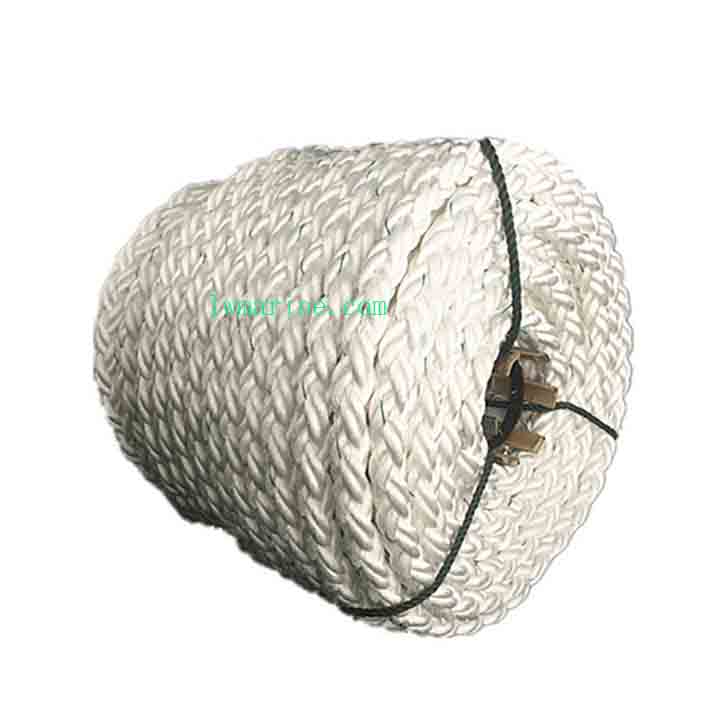
16-Strand Marine Mooring Rope
Our comprehensive range of 16 strand ropes represents the pinnacle of modern rope-making technology, offering superior strength, durability, and handling characteristics for the most demanding marine and industrial applications. We manufacture a full spectrum of synthetic ropes using high-quality fibers, including nylon (polyamide), polypropylene, polyester, and polypropylene/polyester mixed constructions, ensuring the perfect line for every task.
The 16 strand braided construction is a significant advancement in rope technology. Utilizing imported high-speed braiding machinery, this specialized structure and manufacturing process optimizes the utilization rate of fiber strength. The result is a rope with outstanding advantages: low elongation under load, exceptional wear resistance, a smooth surface, and easy operation making it ideal for applications where performance and reliability are non-negotiable.
Our ropes are the preferred choice for critical operations in:
-
Shipbuilding and Shipyards
-
Ocean Transportation and Merchant Shipping
-
Offshore Petroleum Drilling
-
National Defense and Military Industry
-
Harbor Loading and Unloading (Tugs & Port Operations)
Key Features & Benefits:
-
✔ Optimized 16 Ply Braided Structure: The unique braid pattern maximizes the utilization rate of fiber strength, resulting in a stronger, more efficient rope than conventional constructions.
-
✔ Low Elongation: Engineered to minimize stretch under load, providing better control during critical towing and mooring operations.
-
✔ Exceptional Wear Resistance: The braided construction creates a durable outer surface that withstands abrasion against fairleads, bitts, and dock edges.
-
✔ Smooth & Easy to Handle: The rope has a round, smooth profile that is easy on the hands and runs freely through winches and blocks without hockling.
-
✔ Wide Material Selection: Available in nylon (polyamide), polyester, polypropylene, and mixed fibers to match specific requirements for strength, flotation, UV resistance, and chemical resistance.
Technology & Manufacturing Excellence
Our 16 strand ropes are manufactured to the highest standards, incorporating imported braiding technology to ensure consistent quality and performance.
-
Coil Length: Standard 220 meters (custom lengths available)
-
Spliced Strength: Approximately 10% lower than the nominal Minimum Breaking Load (MBL).
-
Weight and Length Tolerance: ± 5%
-
MBL (Minimum Breaking Load): Determined in accordance with ISO 2307 standards.
-
Other Sizes: Available upon request for specialized applications.
Main Performance Characteristics by Material
| Material | Specific Density | Flotation | Melting Point | Abrasion Resistance | U.V. Resistance | Temperature Resistance | Chemical Resistance |
|---|---|---|---|---|---|---|---|
| Polyamide Multifilament (Nylon) | 1.14 | No | 215 ℃ | Very Good | Very Good | 120 ℃ Max | Very Good |
| Polyamide Yarn (Nylon) | 1.14 | No | 215 ℃ | Very Good | Very Good | 120 ℃ Max | Very Good |
| Polypropylene Multifilament | 0.91 | Yes | 165 ℃ | Medium | Medium | 70 ℃ Max | Good |
| Polyester | 1.27 | No | 260 ℃ | Good | Good | 120 ℃ Max | Good |
Technical Parameter Table (Minimum Breaking Load – MBL in KN)
Select the correct diameter and material for your specific application. Diameter is given in millimeters (mm) and circumference in inches.
| Spec. Dia (mm) | Spec. Cir. (inches) | PA Multifilament (KN) | PA Yarn (KN) | PP Multifilament (KN) | Polyester (KN) |
|---|---|---|---|---|---|
| 20 | 2-1/2 | 87 | 73 | 69 | 76 |
| 24 | 3 | 123 | 106 | 96 | 108 |
| 28 | 3-1/2 | 164 | 140 | 127 | 143 |
| 32 | 4 | 211 | 177 | 160 | 184 |
| 36 | 4-1/2 | 264 | 220 | 201 | 231 |
| 40 | 5 | 323 | 265 | 243 | 283 |
| 44 | 5-1/2 | 386 | 318 | 292 | 339 |
| 48 | 6 | 453 | 372 | 339 | 400 |
| 52 | 6-1/2 | 527 | 432 | 393 | 466 |
| 56 | 7 | 605 | 495 | 449 | 538 |
| 60 | 7-1/2 | 690 | 564 | 513 | 614 |
| 64 | 8 | 780 | 637 | 581 | 694 |
| 72 | 9 | 976 | 795 | 729 | 868 |
| 80 | 10 | 1188 | 972 | 897 | 1059 |
Frequently Asked Questions (FAQs)
Q1: What does “16 strand” mean, and what are the advantages of this construction?
A: “16 strand” refers to the specific braided construction of the rope, where 16 individual strands of yarn are braided together in a specific pattern. The key advantage is a superior balance of properties compared to 3-strand twisted or 8-strand plaited ropes. It offers higher strength utilization (stronger for the same weight), low elongation, excellent wear resistance, and a smooth, round profile that is easy to handle and splice, and resists kinking.
Q2: How do I choose between nylon, polyester, and polypropylene for my marine rope?
A: The choice depends on the application:
-
Nylon (Polyamide): Best for mooring lines and towing hawsers where high shock absorption and elasticity are needed. It is very strong and abrasion-resistant but loses some strength when wet and sinks.
-
Polyester: Ideal for applications requiring low elongation and high strength under constant load, such as sailboat sheets, halyards, and permanent mooring lines. It has excellent UV resistance and retains strength when wet.
-
Polypropylene: The main advantage is that it floats, making it useful for heaving lines, ski ropes, and buoys. It is lighter and less expensive but has lower strength and UV resistance compared to nylon or polyester.
Q3: What does MBL (Minimum Breaking Load) mean, and how should I use it to select a rope?
A: MBL (Minimum Breaking Load) , listed in the parameter table in kilonewtons (KN), is the minimum force at which a new, dry rope sample is guaranteed to break during a tensile test, as per ISO 2307. This is a theoretical maximum. The safe Working Load Limit (WLL) for your application should be a fraction of the MBL, determined by an appropriate safety factor (often 5:1, 7:1, or higher for critical applications involving personnel safety). Never operate a rope near its MBL.
Q4: What is the typical splicing strength loss for this 16 strand rope?
A: A properly executed splice in a 16 strand rope is very efficient. The spliced strength is approximately 10% lower than the nominal MBL. This is an excellent strength retention rate and is why spliced eyes are the preferred termination method for high-performance mooring and towing lines, rather than knots which can reduce strength by up to 50%.
Q5: Can these ropes be used for offshore oil drilling applications?
A: Yes, our 16 strand ropes are well-suited for the offshore petroleum drilling industry. The combination of high strength, low elongation, and excellent abrasion resistance makes them ideal for use as mooring lines for supply vessels, tug lines, and as part of the handling systems for offshore equipment. Specific materials like polyester are often preferred for their stability and UV resistance in this environment.
Q6: Are these ropes resistant to sunlight (UV) and chemicals?
A: Resistance varies by material. As noted in the performance table:
-
Nylon and Polyester offer Very Good to Good UV resistance, making them suitable for long-term outdoor exposure.
-
Polypropylene has only Medium UV resistance and may degrade faster in direct sunlight.
For chemical resistance, nylon and polyester perform very well against common oils and marine chemicals. Always consult specific compatibility charts for exposure to aggressive chemicals.
Attention please: The description was copied from different cooperating manufacturers. The description may be different with the goods, please check with us when order.
Tag: Our other products
Click here to contact us via whatsapp