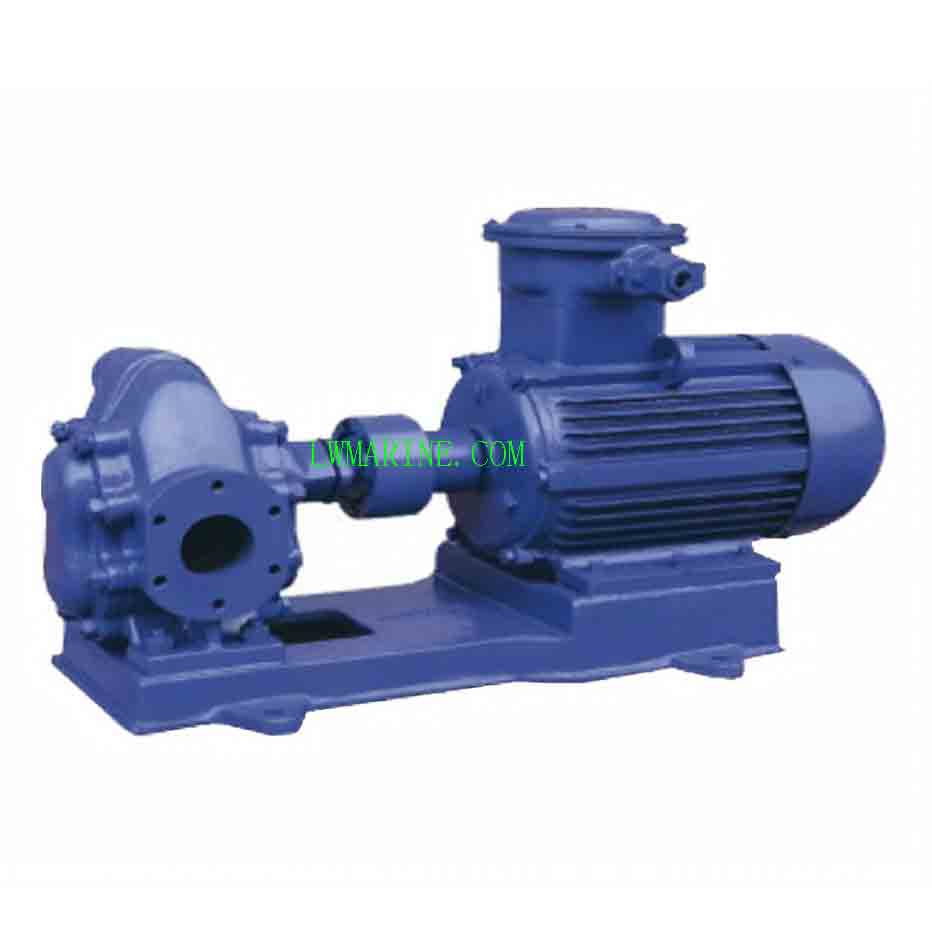
Marine rotary pumps, including gear pumps, screw pumps, and vane pumps, are critical components in shipboard systems for fuel transfer, lubrication, and hydraulic power. This guide provides a detailed overview of their installation, commissioning, operation, maintenance, and repair, with a focus on key considerations to ensure optimal performance and longevity.
1. Installation of Marine Rotary Pumps
1.1 Pre-Installation Preparation
- Site Selection: Choose a dry, well-ventilated area with easy access for maintenance. Avoid locations near heat sources or corrosive environments.
- Foundation Design: Use reinforced concrete or steel frames with anti-vibration mounts to minimize resonance. For example, a screw pump’s foundation should account for its axial thrust during operation.
- Alignment Checks: Ensure the pump shaft and motor are aligned within 0.05mm tolerance to prevent premature wear.
1.2 Step-by-Step Installation
- Mounting: Secure the pump to the foundation using high-tensile bolts, ensuring no gaps between the base and mount.
- Piping: Connect suction and discharge lines with flexible joints to absorb vibrations. Avoid sharp bends to reduce pressure loss.
- Electrical Wiring: Follow IP55 or higher standards for motor connections, with proper grounding to prevent electrical faults.
- Pre-Fill with Fluid: For screw pumps, prime the system with oil to avoid dry running during startup.
Key Considerations
- Thermal Expansion: Account for pipe expansion in hot fluid applications (e.g., boiler feed pumps).
- Accessibility: Leave sufficient space around the pump for routine inspections and part replacements.
2. Commissioning of Marine Rotary Pumps
2.1 Initial Checks
- Leakage Test: Pressurize the system to 1.5× the rated pressure and inspect for leaks at joints and seals.
- Rotation Direction: Verify motor rotation matches the pump’s arrow markings to prevent reverse flow.
- Vibration Analysis: Use a portable accelerometer to check for excessive vibration (>3.5mm/s requires adjustment).
2.2 Performance Testing
- Flow Rate: Measure with a flowmeter at rated RPM (e.g., 1,450 RPM for a 50Hz gear pump).
- Pressure Stability: Monitor discharge pressure for fluctuations caused by air entrainment or clogged filters.
- Noise Level: Record decibel readings; abnormal noise (>85dB) may indicate misalignment or worn bearings.
Case Study: Screw Pump Commissioning
A marine screw pump used for fuel transfer exhibited 0.12mm vibration at the motor outlet box during commissioning. By adjusting the motor’s balance weights and reinforcing the foundation, vibration was reduced to 0.04mm, meeting ISO 10816-3 standards.
3. Operation of Marine Rotary Pumps
3.1 Startup Procedures
- Open Valves: Fully open suction and discharge valves to prevent pressure surges.
- Priming: For vane pumps, ensure the casing is filled with fluid to avoid cavitation.
- Gradual Acceleration: Increase RPM from 0 to rated speed over 10–15 seconds to reduce mechanical stress.
3.2 Monitoring During Operation
- Temperature: Keep bearing temperatures below 70°C (e.g., using PT100 sensors).
- Pressure Gauges: Install analog gauges at suction and discharge points for real-time monitoring.
- Filter Differential Pressure: Replace filters when the pressure drop exceeds 0.5 bar to prevent pump starvation.
3.3 Shutdown Procedures
- Close Discharge Valve: Prevent backflow by shutting the discharge line first.
- Cool Down: Run the pump at idle for 2–3 minutes to dissipate heat (critical for high-temperature applications like thermal oil pumps).
- Isolation: Lock out electrical power to avoid accidental restarts.
4. Maintenance and Repair of Marine Rotary Pumps
4.1 Preventive Maintenance Schedule
| Task | Frequency | Tools Required |
|---|---|---|
| Lubrication Check | Weekly | Grease gun, dipstick |
| Seal Inspection | Monthly | Flashlight, leak detection dye |
| Coupling Alignment | Quarterly | Dial indicator, laser aligner |
| Bearing Replacement | Biannually | Puller, press tool |
4.2 Common Repairs
- Mechanical Seal Failure: Replace with OEM-approved seals (e.g., John Crane Type 21) and check for misalignment.
- Worn Gears: For gear pumps, measure tooth clearance; replace if >0.15mm.
- Vane Damage: Inspect vane tips for wear; resurface or replace vanes if chipped.
4.3 Spare Parts Inventory
- Critical Items: Bearings (SKF 6206), mechanical seals, O-rings, and coupling elements.
- Storage: Keep spares in a climate-controlled room with silica gel packs to prevent corrosion.
5. Key Considerations for Marine Rotary Pumps
5.1 Material Compatibility
- Seawater Applications: Use duplex stainless steel (e.g., 316L) for casings to resist corrosion.
- Fuel Systems: Opt for bronze or nickel-aluminum bronze gears for compatibility with diesel and biofuels.
5.2 Environmental Protection
- Oil Leak Prevention: Install drip trays under pumps handling hazardous fluids (e.g., hydraulic oil).
- Noise Reduction: Enclose pumps in acoustic hoods if operating near crew quarters.
5.3 Regulatory Compliance
- MARPOL Annex VI: Ensure pumps meet emission standards for oil-water separators.
- SOLAS Requirements: Verify fire-resistant materials for pumps in engine rooms.
FAQs About Marine Rotary Pumps
Q1: How often should I replace the mechanical seal on a marine gear pump?
A: Replace seals every 12–18 months or if leakage exceeds 5 drops/minute. Use OEM parts to ensure compatibility.
Q2: What causes pressure fluctuations in a screw pump?
A: Common causes include air entrainment, worn stator liners, or clogged suction strainers. Check the filter differential pressure and inspect the stator for wear.
Q3: Can I run a vane pump dry?
A: No. Vane pumps require fluid lubrication; dry running will cause rapid vane and casing wear. Always prime the system before startup.
Q4: How do I align a pump shaft with the motor?
A: Use a laser alignment tool or dial indicators. Ensure radial and axial misalignment is <0.05mm. Recheck after the first 24 hours of operation due to thermal expansion.
Q5: What is the maximum allowable vibration for a marine rotary pump?
A: According to ISO 10816-3, vibration velocity should not exceed 4.5mm/s for pumps <300kW. Higher values indicate misalignment or bearing failure.
Conclusion
Proper installation, commissioning, operation, and maintenance of marine rotary pumps are essential for reliable shipboard performance. By adhering to best practices—such as regular alignment checks, material selection for corrosive environments, and proactive spare parts management—operators can minimize downtime and extend pump lifespan. For complex repairs, consult OEM manuals or engage certified marine engineers to ensure compliance with safety standards.
Keywords: marine rotary pumps, gear pump installation, screw pump maintenance, vane pump operation, marine pump repair, shipboard pump commissioning.
If you need marine pump, please contact us freely.