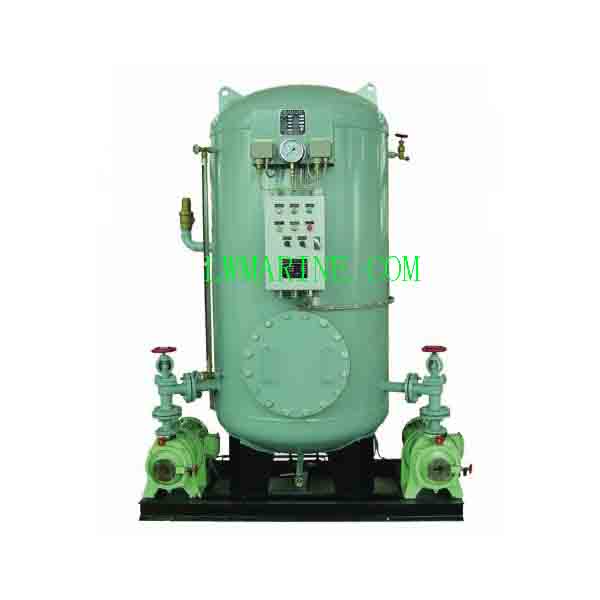
Marine Fresh Water Hydrophore Unit
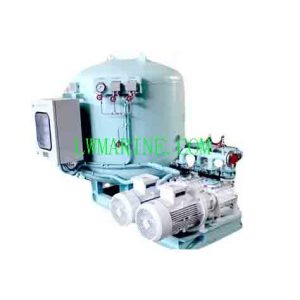
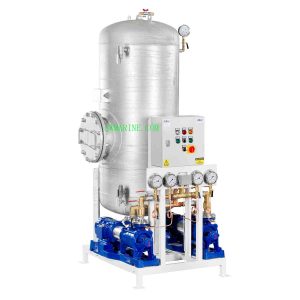
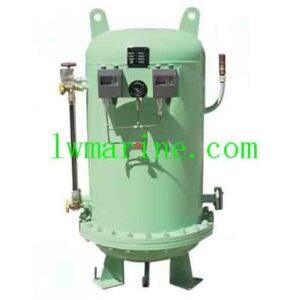
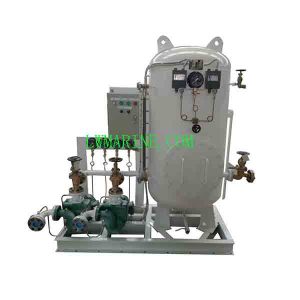
The Ship Fresh Water Hydrophore Tank is a precision-engineered, high-reliability pressure vessel system designed to deliver a consistent and dependable fresh water supply for all onboard needs. From crew sanitation and galley operations to general washing and utility services, this robust unit ensures that water is always available at the correct pressure, regardless of demand fluctuations or challenging sea conditions.
Engineered specifically for the rigorous demands of the marine environment, this hydrophore system features a fail-safe dual-pump configuration—with one operational pump and one fully integrated standby pump—guaranteeing uninterrupted water supply even during maintenance or peak usage. Every unit is built with durability and redundancy in mind, incorporating high-quality pressure gauges, safety valves, pressure switches, and a fully automatic control system for hands-off, reliable operation.
Compact, Powerful, and Built to Last
Despite its compact footprint, this hydrophore tank packs significant power and storage capacity. It is constructed from corrosion-resistant materials and engineered to withstand the constant vibration, humidity, and salt-laden atmosphere of a ship’s engine room or dedicated pump room. Whether installed on a commercial vessel, offshore platform, or luxury yacht, it provides the hygienic, pressurized water flow essential for maintaining a healthy and efficient onboard environment.
Key Features & Benefits
-
✅ Dual-Pump Redundancy System: Includes one main pump and one standby pump. If the primary pump fails or is unable to meet demand, the system automatically switches to the standby unit, ensuring continuous, fail-safe performance and eliminating the risk of water supply interruption.
-
✅ Fully Automatic Operation: Integrated pressure switches and a dedicated control panel provide automatic pump start/stop based on real-time system pressure, minimizing manual intervention and optimizing energy use.
-
✅ Comprehensive Safety Measures: Equipped with a calibrated safety valve to prevent over-pressurization, a pressure gauge valve for isolation, and a direct-reading pressure gauge for constant visual monitoring, all working together to ensure equipment longevity and operational safety.
-
✅ Robust Marine Construction: Built to withstand harsh marine environments using corrosion-resistant materials and compliant engineering standards (ISO, CCS, etc.).
-
✅ Easy Maintenance & Service: The modular design, with accessible pumps, valves, and controls, allows for quick inspection, servicing, and parts replacement, significantly reducing vessel downtime.
-
✅ Flexible Capacity Options: Available in a wide range of volumes from 0.12 m³ to 3.0 m³, allowing for precise matching to the vessel’s size, crew complement, and specific water demand profile.
-
✅ Space-Efficient Design: Integrates all components (tank, pumps, controls) into a single, skid-mounted unit that minimizes the required deck or engine room footprint.
Technical Specifications
| Parameter | Specification |
|---|---|
| Volume Range | 0.12 – 3.0 m³ |
| Working Pressure | 0.4 – 0.6 MPa |
| Design Pressure | 0.4 – 0.7 MPa |
| Strength Test Pressure | 1.05 MPa |
| Air Tightness Test Pressure | 0.875 MPa |
| Safety Valve Opening Pressure | 0.63 MPa |
| Medium | Fresh Water (Potable) |
| Operation Mode | Fully Automatic (Pressure Controlled) |
Model Overview & Pump Specifications
Our ZYG Series Fresh Water Hydrophore Tanks are available in multiple sizes to suit any vessel. All models feature the same reliable 1.5CWX-2 pump for consistent performance and easy parts commonality.
| Model | Volume (m³) | Design Pressure (MPa) | Working Pressure (MPa) | Water Pump Model | Motor Power (kW) | Pump Capacity (m³/h) | Pump Pressure (MPa) |
|---|---|---|---|---|---|---|---|
| ZYG-0.2 | 0.2 | 0.7 | 0.4 | 1.5CWX-2 | 2.2 | 3 | 0.4 |
| ZYG-0.3 | 0.3 | 0.7 | 0.4 | 1.5CWX-2 | 2.2 | 3 | 0.4 |
| ZYG-0.5 | 0.5 | 0.7 | 0.4 | 1.5CWX-2 | 2.2 | 3 | 0.4 |
| ZYG-1.0 | 1.0 | 0.7 | 0.4 | 1.5CWX-2 | 2.2 | 3 | 0.4 |
| ZYG-1.5 | 1.5 | 0.7 | 0.4 | 1.5CWX-2 | 2.2 | 3 | 0.4 |
| ZYG-2.0 | 2.0 | 0.7 | 0.4 | 1.5CWX-2 | 2.2 | 3 | 0.4 |
| ZYG-2.5 | 2.5 | 0.7 | 0.4 | 1.5CWX-2 | 2.2 | 3 | 0.4 |
Note: Custom configurations and larger capacities (up to 3.0 m³) are available upon request.
Applications
The Ship Fresh Water Hydrophore Tank is the ideal solution for maintaining hygiene and operational efficiency on a wide variety of vessels and offshore installations:
-
Commercial Vessels: Cargo ships, container vessels, tankers, and bulk carriers.
-
Passenger Ships: Ferries, cruise liners, and passenger vessels requiring high-capacity, reliable water supply for hundreds of passengers.
-
Offshore Platforms: Oil rigs, FPSOs, and accommodation barges where uninterrupted water supply is critical.
-
Workboats & Tugs: Providing fresh water for crew quarters and deck operations.
-
Naval & Government Vessels: Meeting stringent reliability and durability standards.
-
Luxury Yachts: Ensuring a comfortable, hotel-like experience for owners and guests.
Frequently Asked Questions (FAQs)
Q1: What is a “Hydrophore” system, and why is it needed on a ship?
A: A Hydrophore system (or pressure water system) is essential on ships because onboard pumps cannot run continuously. The system uses a sealed tank that is partially filled with water and partially with compressed air. This compressed air acts as a cushion, pushing water out to the taps and fixtures without the pump running. When pressure drops, the pump runs briefly to refill the tank. This provides constant, stable pressure, protects the pump from rapid cycling, and stores an emergency reserve of pressurized water.
Q2: Why is a dual-pump system important for marine applications?
A: Redundancy is critical at sea. If a single pump fails, the entire water supply is lost. Our dual-pump system with one operational and one standby pump provides fail-safe redundancy. If the primary pump experiences an issue or cannot keep up with peak demand, the control system automatically switches to the standby pump, ensuring that the crew and critical systems never lose access to fresh water until maintenance can be performed.
Q3: What do the different pressure ratings (Design, Working, Test) mean?
A:
-
Working Pressure: The normal pressure range (0.4–0.6 MPa) at which the system operates.
-
Design Pressure: The maximum pressure (0.7 MPa) the tank is built to withstand under normal operating conditions.
-
Strength Test Pressure (1.05 MPa): The pressure at which the tank is hydrostatically tested during manufacturing to verify its structural integrity before it enters service.
-
Safety Valve Opening Pressure (0.63 MPa): The pressure at which the safety valve is set to open, acting as a final safeguard to prevent pressure from exceeding safe limits.
Q4: How do I choose the correct tank volume (0.2 m³ vs. 2.5 m³) for my vessel?
A: The correct volume depends on your vessel’s water demand. Key factors include the number of crew/passengers, the number of bathrooms and galleys, and the pump’s flow rate. A larger tank provides a larger reserve of pressurized water, reducing the frequency of pump starts (which saves energy and extends pump life) and better handling of peak demand (e.g., multiple showers at once). Our engineering team can help you calculate the optimal size based on your specific vessel specifications.
Q5: What maintenance is required for the pressure switches and safety valves?
A: Regular maintenance should include:
-
Visual Inspection: Check for leaks, corrosion, or damage.
-
Functional Testing: Periodically test the pressure switches by observing the pump cut-in and cut-out pressures. Test the safety valve by manually lifting the lever (with caution) to ensure it is not seized.
-
Calibration: During scheduled maintenance, have a technician verify the calibration of the pressure switches to ensure they are starting and stopping the pump at the correct pressures. Safety valves should be tested or re-certified per classification society rules.
Q6: Can this system be integrated with a ship’s existing automation or alarm system?
A: Yes. The electric control box can be configured to provide remote status signals (e.g., pump running, low pressure, high pressure, pump failure) to the ship’s central alarm monitoring system. Please specify your interface requirements when ordering.
Attention please: The description was copied from different cooperating manufacturers. The description may be different with the goods, please check with us when order.
Tag: Our other products
Click here to contact us via whatsapp