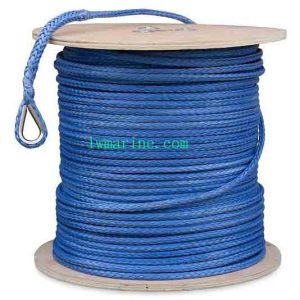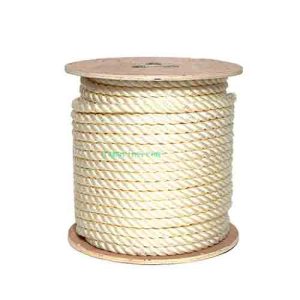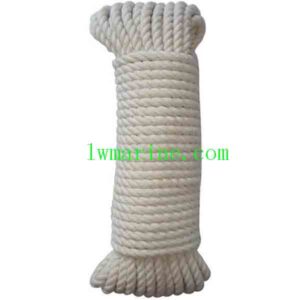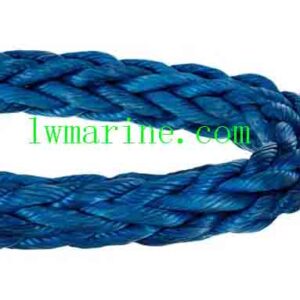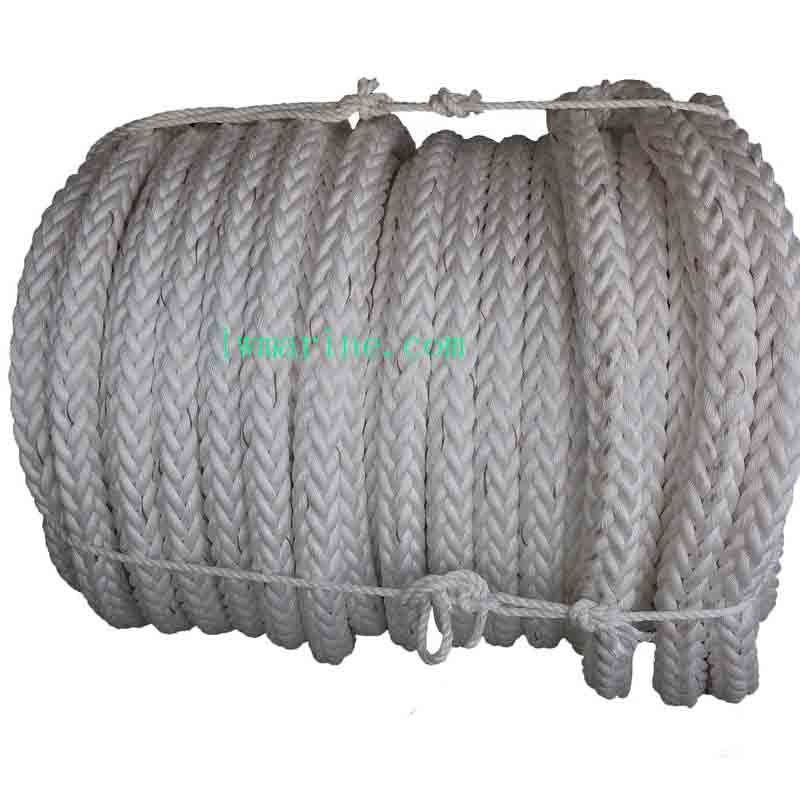
12-Strand Marine Mooring Rope
We offer a comprehensive range of high-performance marine mooring ropes and ship ropes, manufactured using advanced German braiding technology. Our extensive product line includes ropes made from a variety of synthetic fibers to suit the diverse needs of the maritime industry, including Nylon (Polyamide) Multifilament, Polypropylene (PP) Multifilament, Polyester, and PP/Polyester Mixed constructions.
Engineered for durability and reliability, these ropes feature a reasonable braided structure and scientific manufacturing processes that result in exceptional performance characteristics. Key advantages include high tensile strength, low elongation (minimizing stretch under load), excellent wearing resistance, and superior anti-corrosion properties against seawater and UV radiation. Their simple operation and handling make them the preferred choice for demanding marine applications.
These high-quality ropes are widely used in critical fields, including:
-
Shipbuilding & Ship Repair: For mooring, towing, and securing vessels.
-
Ocean Transportation & Shipping: For lashing cargo and mooring operations.
-
National Defense & Military Industry: For specialized naval applications.
-
Offshore Petroleum Exploration: For anchoring rigs and supply vessel operations.
-
Harbor & Port Operations: For tugboats, pilot boats, and dock lines.
Key Features & Benefits
-
✅ German-Inspired Technology: Manufactured using advanced braiding techniques for consistent quality and optimal fiber alignment.
-
✅ High Strength & Low Elongation: Engineered to handle heavy working loads with minimal stretch, providing secure and stable mooring.
-
✅ Excellent Durability: Superior resistance to abrasion (wearing), UV degradation, and seawater corrosion ensures a long service life.
-
✅ Variety of Materials: Choose the perfect rope for your specific needs: Nylon for shock loads, Polyester for low stretch, Polypropylene for lightweight floating applications.
-
✅ Easy to Handle & Splice: Flexible construction allows for simple operation, making them easy for deck crews to manage.
-
✅ Floating Options (PP): Polypropylene ropes are lighter than water, making them ideal for heaving lines and applications where visibility and buoyancy are required.
Technical Specifications & Rope Parameters
Below is a comprehensive parameter table for our standard range of marine ropes. Diameters are provided in both millimeters (mm) and inches (circumference).
-
PA Multifilament: Polyamide (Nylon) – High strength, excellent shock absorption.
-
PA Yarn: Polyamide yarn construction.
-
PP Multifilament: Polypropylene – Lightweight, floats, good chemical resistance.
-
Polypropylene: Standard polypropylene.
-
Polyester (PET): Low stretch, high strength, excellent UV resistance.
-
PP/PET Mixed: A blended rope combining the buoyancy of PP with the strength of Polyester.
| Dia. (mm) | Cir. (inch) | PA Multifilament | PA Yarn | PP Multifilament | Polypropylene | Polyester | PP/PET Mixed | ||||||
|---|---|---|---|---|---|---|---|---|---|---|---|---|---|
| Density (Ktex) | B.L. (KN) | Density (Ktex) | B.L. (KN) | Density (Ktex) | B.L. (KN) | Density (Ktex) | B.L. (KN) | Density (Ktex) | B.L. (KN) | Density (Ktex) | B.L. (KN) | ||
| 20 | 2-1/2 | 247 | 81 | 247 | 70 | 189 | 64 | 180 | 58 | 303 | 64 | 194 | 70 |
| 24 | 3 | 355 | 114 | 355 | 101 | 273 | 89 | 260 | 81 | 437 | 91 | 279 | 98 |
| 28 | 3-1/2 | 484 | 152 | 484 | 151 | 373 | 132 | 355 | 107 | 594 | 122 | 380 | 133 |
| 32 | 4 | 632 | 196 | 632 | 196 | 483 | 163 | 460 | 135 | 778 | 157 | 497 | 170 |
| 36 | 4-1/2 | 800 | 245 | 800 | 244 | 614 | 198 | 585 | 169 | 982 | 194 | 629 | 214 |
| 40 | 5 | 987 | 300 | 987 | 290 | 756 | 242 | 720 | 205 | 1215 | 240 | 776 | 262 |
| 44 | 5-1/2 | 1190 | 358 | 1190 | 348 | 924 | 286 | 880 | 246 | 1468 | 285 | 939 | 314 |
| 48 | 6 | 1420 | 420 | 1420 | 409 | 1092 | 336 | 1040 | 286 | 1750 | 336 | 1110 | 371 |
| 52 | 6-1/2 | 1670 | 489 | 1670 | 473 | 1281 | 385 | 1220 | 331 | 2050 | 392 | 1320 | 432 |
| 56 | 7 | 1930 | 561 | 1930 | 523 | 1491 | 430 | 1420 | 378 | 2380 | 448 | 1520 | 499 |
| 60 | 7-1/2 | 2220 | 640 | 2220 | 600 | 1712 | 495 | 1630 | 433 | 2730 | 499 | 1750 | 569 |
| 64 | 8 | 2530 | 723 | 2530 | 671 | 1943 | 558 | 1850 | 490 | 3110 | 579 | 1990 | 644 |
| 72 | 9 | 3200 | 905 | 3200 | 836 | 2457 | 710 | 2340 | 615 | 3930 | 721 | 2520 | 805 |
| 80 | 10 | 3950 | 1102 | 3950 | 1025 | 3045 | 858 | 2900 | 756 | 4850 | 884 | 3110 | 982 |
| 88 | 11 | 4780 | 1326 | 4780 | 1270 | 3686 | 998 | 3510 | 907 | 5870 | 1061 | 3750 | 1183 |
| 96 | 12 | 5690 | 1561 | 5690 | 1470 | 4379 | 1178 | 4170 | 1071 | 6990 | 1255 | 4470 | 1397 |
| 104 | 13 | 6670 | 1816 | 6670 | 1760 | 5145 | 1351 | 4900 | 1228 | 8200 | 1448 | 5260 | 1622 |
| 112 | 14 | 7740 | 2091 | 7740 | 2000 | 5985 | 1560 | 5700 | 1418 | 9500 | 1652 | 6050 | 1877 |
| 120 | 15 | 8880 | 2387 | 8880 | 2299 | 6825 | 1791 | 6500 | 1628 | 10900 | 1902 | 6980 | 2142 |
| 128 | 16 | 10100 | 2703 | 10100 | 2640 | 7770 | 2022 | 7400 | 1838 | 12400 | 2152 | 7950 | 2417 |
| 136 | 17 | 11400 | 3040 | 11400 | 2880 | 8820 | 2276 | 8400 | 2069 | 14000 | 2448 | 8950 | 2713 |
| 144 | 18 | 12800 | 3386 | 12800 | 3245 | 9870 | 2540 | 9400 | 2309 | 15700 | 2703 | 10100 | 3029 |
| 160 | 20 | 15800 | 4141 | 15800 | 3900 | 12097 | 3112 | 11521 | 2829 | 19400 | 3335 | 12500 | 3703 |
Note: B.L. = Breaking Load (Kilonewtons). Density in Ktex (g/m). Values are nominal and may vary slightly by production batch.
Material Performance Comparison
Choosing the right rope material depends on your specific application requirements. Use this guide to compare the key properties.
| Property | Polyamide (Nylon) Multifilament | Polypropylene Multifilament | Polypropylene | Polyester | PP/Polyester Mixed |
|---|---|---|---|---|---|
| Specific Density (g/cm³) | 1.14 | 0.91 | 0.91 | 1.27 | 0.95 |
| Flotation | Not Floating (Sinks) | Floating | Floating | Not Floating (Sinks) | Floating |
| Melting Point | 215°C | 165°C | 165°C | 260°C | 165°C / 260°C |
| Abrasion Resistance | Very Good | Medium | Medium | Good | Good |
| UV Resistance | Very Good | Medium | Medium | Good | Good |
| Max. Working Temp. | 120°C | 70°C | 70°C | 120°C | 80°C |
| Chemical Resistance | Very Good | Good | Good | Good | Good |
Frequently Asked Questions (FAQ)
1. What is the difference between Nylon (Polyamide) and Polyester mooring ropes?
The main difference lies in their stretch and strength characteristics.
-
Nylon (Polyamide) is known for its high elasticity and excellent shock absorption. It can stretch significantly under load, making it ideal for applications involving dynamic loads, snubbing, or towing, where it acts as a spring to absorb sudden forces. However, it loses some strength when wet and is not as UV resistant as polyester.
-
Polyester has very low stretch (low elongation) and maintains its strength even when wet. It has excellent UV resistance and is the preferred choice for static mooring lines, dock lines, and applications where minimal movement is critical.
2. Which type of rope floats, and why is that important?
Ropes made from Polypropylene (PP) have a specific density of less than 1 (0.91 g/cm³), meaning they are lighter than water and will float. This is a critical feature for:
-
Heaving Lines: A floating line is easy to throw and retrieve.
-
Man Overboard Situations: A floating line can be deployed without sinking and getting caught in a propeller.
-
Tow Lines in Shallow Water: Prevents the line from snagging on the seabed.
Nylon and Polyester are heavier than water and will sink.
3. What does “Breaking Load (B.L.)” mean and how do I calculate Safe Working Load (SWL)?
Breaking Load (B.L.) , expressed in Kilonewtons (kN) in our table, is the maximum force the rope can withstand before it is expected to break. It is determined through destructive testing. The Safe Working Load (SWL) , which is the maximum force you should apply to the rope during normal use, is always a fraction of the breaking load.
It is standard industry practice to apply a safety factor of 5:1 to 12:1 for mooring lines, depending on the application (e.g., 5:1 for general mooring, higher for lifting or personnel safety). For example, a rope with a 100 kN B.L. should have an SWL of no more than 20 kN (approx. 2 tons-force) with a 5:1 safety factor. Never exceed the recommended SWL.
4. What does “Ktex” mean in the specification table?
Ktex is a unit of linear density, representing the mass of the rope in grams per meter (g/m) multiplied by 1000. 1 Ktex = 1 g/m. A higher Ktex value indicates a heavier and generally thicker or more densely constructed rope for the same diameter. It is a useful specification for engineers calculating weights and loads.
5. What is “PP/PET Mixed” rope and what are its advantages?
PP/PET Mixed rope is a blended construction combining Polypropylene (PP) and Polyester (PET) fibers. This hybrid rope is designed to offer a balance of properties:
-
It is lighter than pure polyester and often floats (density ~0.95).
-
It has better strength and lower stretch than pure polypropylene.
-
It offers good abrasion and UV resistance at a more economical price point than 100% polyester. It is a popular all-purpose rope for general marine use.
Attention please: The description was copied from different cooperating manufacturers. The description may be different with the goods, please check with us when order.
Tag: Our other products
Click here to contact us via whatsapp