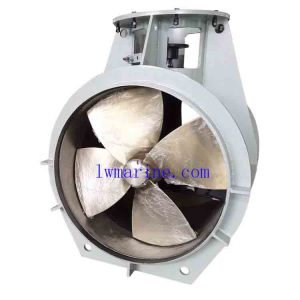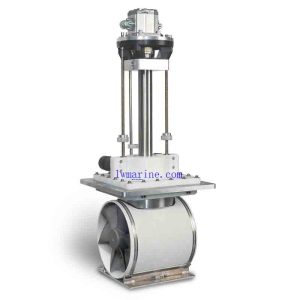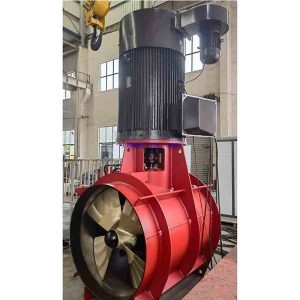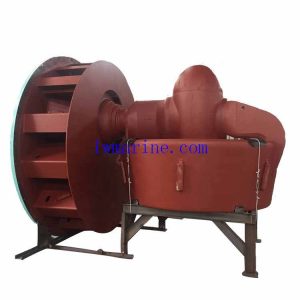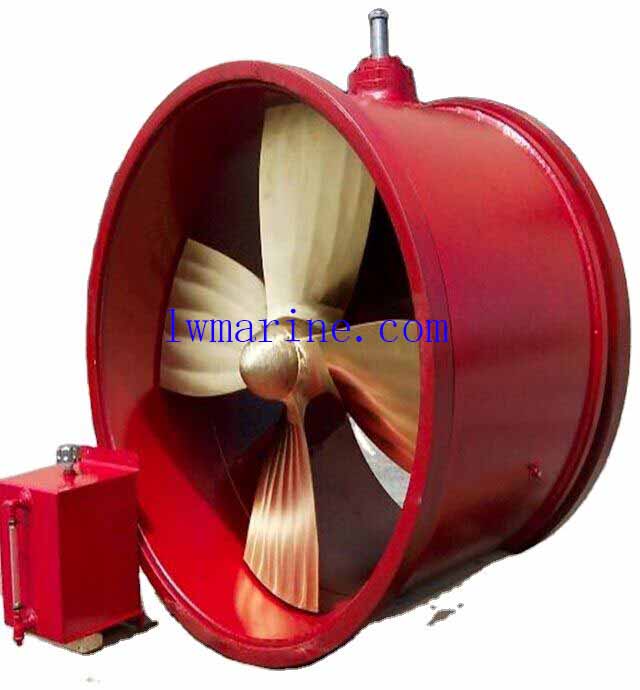
Electric Tunnel Thrusters
The Electric Tunnel Thruster is a state-of-the-art propulsion solution, specifically engineered to dramatically enhance vessel maneuverability during critical operations such as docking, undocking, low-speed navigation, and dynamic positioning (DP). Installed below the waterline in a transverse tunnel through the bow or stern, this electrically driven system delivers instant, precise, and high-efficiency thrust, giving captains ultimate control over the vessel’s lateral movement.
Unlike traditional hydraulic or diesel-powered systems, our electric tunnel thrusters offer a cleaner, quieter, and more responsive alternative. Powered by high-torque electric motors, they provide smooth, instantaneous thrust, allowing for delicate maneuvering in tight harbors, through locks, or when maintaining station against wind and current.
Flexible Propeller Options for Every Application
We understand that different vessels have different operational profiles. That is why our electric tunnel thrusters are available with two distinct propeller configurations:
-
Fixed Pitch Propeller (FPP): A robust, cost-effective, and reliable solution for vessels with standard maneuvering requirements. FPP thrusters offer excellent performance with a simple, durable design.
-
Controllable Pitch Propeller (CPP): For vessels requiring the ultimate in control and efficiency. CPP allows the thrust magnitude and direction to be adjusted by changing the blade pitch while the motor runs at a constant, optimal speed. This provides finer control, faster response, and improved fuel efficiency, making it ideal for dynamic positioning and vessels with variable operational demands.
Key Features & Benefits
-
✅ Clean & Efficient Electric Drive System: Powered by high-torque electric motors, this system eliminates the risk of hydraulic oil leaks, reduces onboard fuel consumption, and lowers overall operational costs compared to diesel-hydraulic alternatives.
-
✅ Low Noise & Vibration: Electric drive is inherently quieter and smoother than hydraulic or diesel systems. This significantly improves passenger comfort on ferries and cruise ships and is essential for vessels operating in environmentally sensitive or noise-restricted zones.
-
✅ Instantaneous Thrust Response: Electric motors provide immediate torque, allowing for rapid thrust generation the moment the control is engaged, ensuring precise maneuvering in critical situations.
-
✅ Flexible Propeller Choice (FPP or CPP): Select the optimal configuration for your vessel’s specific needs, balancing simplicity and cost with the need for ultimate control and efficiency.
-
✅ Global Classification Society Approval: Designed and manufactured to meet the stringent requirements of international maritime standards. Our thrusters are certified by all major IACS members, including ABS, BV, DNV, CCS, KR, GL (now DNV), NK, and RINA, ensuring global acceptance.
-
✅ Fully Customizable Solutions: We offer tailored designs to meet specific vessel requirements, including custom power ratings, tunnel dimensions, and seamless integration with your vessel’s main control system or DP interface.
-
✅ Robust & Reliable Construction: Built with marine-grade materials to withstand the harsh underwater environment and provide years of dependable service with minimal maintenance.
Technical Specifications
| Parameter | Specification |
|---|---|
| Drive Type | Electric Motor (AC) |
| Propeller Types | Fixed Pitch Propeller (FPP) / Controllable Pitch Propeller (CPP) |
| Control System | Motor Starter + Frequency Converter (for variable speed control) |
| Mounting | Transverse Tunnel (Bow or Stern) |
| Certifications | ABS, BV, DNV, CCS, KR, GL (DNV), NK, RINA (others on request) |
| Customization | Power, tunnel length/diameter, control system integration available. |
FPP (Fixed Pitch Propeller) Electric Tunnel Thruster Parameters
| Model | FP-500 | FP-600 | FP-800 | FP-900 | FP-1100 | FP-1300 | FP-1480 |
|---|---|---|---|---|---|---|---|
| Max Thrust (kN) | 10 / 11.2 | 14.5 / 16.3 | 29.5 / 30.5 | 31 / 35.4 | 49 / 53.8 | 67 / 73 | 88 / 95 |
| Cylinder Length (mm) | 600 | 800 | 920 | 920 | 1045 | 1190 | 1320 |
| Cylinder Internal Dia. (mm) | 515 | 615 | 818 | 918 | 1120 | 1328 | 1510 |
| Max Input Power (kW) | 63 / 72 | 90 / 105 | 180 / 190 | 200 / 235 | 315 / 340 | 445 / 480 | 560 / 620 |
| Gear Ratio | 1.52 | 2.071 | 2.417 | 2.42 | 3.09 | 3.78 | 4.364 |
| Propeller Speed (rpm) | 954 / 1151 | 700 / 845 | 600 / 724 | 600 / 724 | 469.1 / 566 | 384 / 463 | 332.3 / 401 |
| Propeller Diameter (mm) | 500 | 600 | 800 | 900 | 1100 | 1300 | 1480 |
| Max Input Torque (Nm) | 600 | 900 | 1400 | 1400 | 2100 | 3000 | 3800 |
| Max Input Speed (rpm) | 1450/1750 | 1450/1750 | 1450/1750 | 1450/1750 | 1450/1750 | 1450/1750 | 1450/1750 |
CPP (Controllable Pitch Propeller) Electric Tunnel Thruster Parameters
| Model | CP-1000 | CP-1100 | CP-1300 | CP-1650 | CP-2000 | CP-2400 | CP-2800 |
|---|---|---|---|---|---|---|---|
| Max Thrust (kN) | 43 | 46 / 47 | 66 / 67 | 97 / 105 | 155 / 144 | 239 / 242 | 298 / 297 |
| Cylinder Length (mm) | 1045 | 1045 | 1190 | 1446 | 1680 | 1990 | 2280 |
| Cylinder Internal Dia. (mm) | 1020 | 1120 | 1328 | 1680 | 2030 | 2430 | 2836 |
| Max Input Power (kW) | 280 | 315 / 335 | 445 / 480 | 680 / 730 | 1050 / 900 | 1580 / 1720 | 2000 / 1910 |
| Gear Ratio | 3.09 | 3.09 | 3.78 | 4.72 | 4.82 | 4.645 | 4.395 |
| Max Input Speed (rpm) | 1450/1750 | 1450/1750 | 1450/1750 | 1450/1750 | 1450/1190 | 980/1190 | 980/880 |
| Propeller Speed (rpm) | 469.1 / 560 | 469 / 566 | 384 / 463 | 307 / 370 | 301 / 247 | 211 / 256 | 223 / 200 |
| Propeller Diameter (mm) | 1000 | 1100 | 1300 | 1650 | 2000 | 2400 | 2800 |
Applications
Electric Tunnel Thrusters are essential for enhancing maneuverability on a wide range of vessels:
-
Passenger Vessels: Ferries, cruise ships, and catamarans where low noise and vibration are critical for passenger comfort.
-
Commercial Ships: Cargo vessels, container ships, and tankers requiring precise docking in ports.
-
Offshore Vessels: Platform Supply Vessels (PSVs) and Anchor Handling Tugs (AHTs) for dynamic positioning and station-keeping.
-
Workboats & Tugs: For enhanced control during ship-assist and complex maneuvering.
-
Yachts & Mega-Yachts: Providing effortless, quiet maneuvering in marinas.
-
Research Vessels: Quiet operation essential for acoustic surveys.
Frequently Asked Questions (FAQs)
Q1: What is the main advantage of an electric tunnel thruster over a hydraulic one?
A: Electric thrusters offer several key advantages:
-
Cleaner Operation: No risk of hydraulic oil leaks into the bilge or environment.
-
Lower Noise & Vibration: Significantly quieter, improving passenger and crew comfort.
-
Instantaneous Response: Electric motors provide immediate torque, allowing for faster, more precise thrust.
-
Simpler Installation: No need for complex hydraulic power units, piping, and cooling systems.
-
Reduced Maintenance: Fewer moving parts and no hydraulic fluid to change.
Q2: What is the difference between Fixed Pitch (FPP) and Controllable Pitch (CPP) propellers for thrusters?
A:
-
FPP (Fixed Pitch): The propeller blades are fixed at one angle. Thrust magnitude and direction are controlled by changing the motor’s rotational speed and direction (on/off or via frequency converter). FPP is simpler and more robust.
-
CPP (Controllable Pitch): The propeller blades can rotate around their own axis. The motor runs at a constant, optimal speed, and thrust is controlled by adjusting the blade pitch. This allows for instant thrust reversal (by passing the blades through zero pitch) and finer, more precise control, making CPP ideal for dynamic positioning.
Q3: How is the thruster controlled from the bridge?
A: The thruster is controlled via a control system that includes a motor starter and, typically, a frequency converter (Variable Frequency Drive – VFD) . The VFD allows for stepless speed control of the motor, providing smooth, proportional thrust. The operator uses a joystick, lever, or DP control system to send commands to the VFD, which then adjusts the motor speed (and blade pitch for CPP) to achieve the desired thrust.
Q4: What do the two numbers in the specifications (e.g., Max thrust 10/11.2 kN) represent?
A: These dual numbers typically represent performance at different operating points, such as:
-
Different Motor Speeds: e.g., performance at 1450 rpm vs. 1750 rpm input.
-
Different Voltage/Frequency: e.g., performance on 50Hz vs. 60Hz power supply.
-
Ahead vs. Astern: In some cases, it might indicate slight differences in thrust between forward and reverse rotation due to the tunnel or propeller design.
Q5: What classification society certifications do you offer?
A: Our Electric Tunnel Thrusters are designed and manufactured to meet the rules of all major IACS (International Association of Classification Societies) members. We can supply units certified by ABS (American Bureau of Shipping), BV (Bureau Veritas), DNV (Det Norske Veritas), CCS (China Classification Society), KR (Korean Register), GL (DNV), NK (Nippon Kaiji Kyokai), and RINA (Registro Italiano Navale) . Please specify your requirements when ordering.
Q6: How do I choose the correct thruster size (model) for my vessel?
A: Selecting the correct thruster involves calculating the required thrust to overcome wind and current forces acting on the vessel’s lateral area. Key factors include:
-
Vessel Size & Windage Area: The larger the vessel and the higher the superstructure, the more thrust is needed.
-
Desired Maneuvering Capability: The required lateral force to turn the vessel at a specific speed or hold it against a certain wind speed.
-
Tunnel Diameter & Installation: The chosen thruster must fit within the vessel’s hull at the desired location.
Our marine engineers can assist you in calculating the required thrust and selecting the optimal model based on your vessel’s specific parameters.
Attention please: The description was copied from different cooperating manufacturers. The description may be different with the goods, please check with us when order.
Tag: Our other products
Click here to contact us via whatsapp