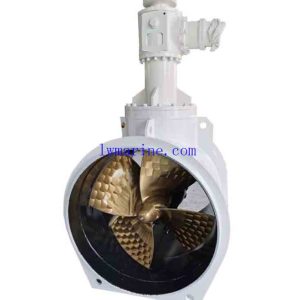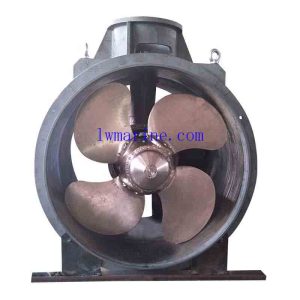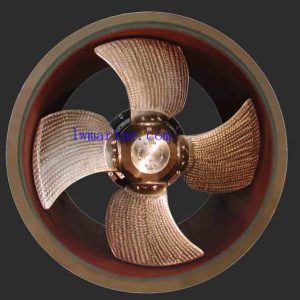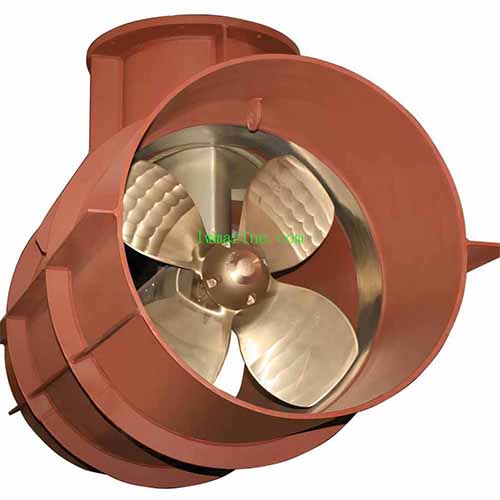
Fixed Pitch Propeller Tunnel Thruster
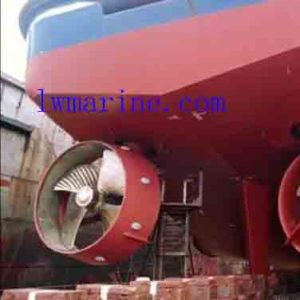
A Fixed Pitch Propeller Bow Thruster is a critical piece of maneuvering equipment mounted laterally in a tunnel through the vessel’s bow, below the waterline. Designed to provide precise lateral thrust, this FPP bow thruster dramatically improves a ship’s ability to dock, undock, and maneuver in tight harbors, canals, and challenging weather conditions. By generating side thrust, it reduces the reliance on tugboats and enhances operational safety.
Our Fixed Pitch Propeller (FPP) tunnel thrusters are available with multiple power configurations, including diesel-driven bow thrusters, electric bow thrusters, and hydraulic bow thrusters. The direction of thrust in FPP systems is reversed by changing the rotation direction of the electric or hydraulic motor. For diesel-powered configurations, an additional reversing gearbox is integrated to facilitate thrust reversal.
Key Features & Benefits
1. Superior Maneuverability
-
Precise Lateral Control: Enables side-to-side movement of the bow, making docking and harbor navigation safer and more efficient.
-
Reduced Tug Dependency: Minimizes or eliminates the need for tugboat assistance, reducing operational costs.
-
Enhanced Safety: Provides emergency steering capability and improves handling in crosswinds and strong currents.
2. Robust Mechanical Design
-
Fixed Pitch Propeller (FPP): Simple, robust design with high reliability and lower maintenance requirements compared to controllable pitch systems.
-
Tunnel Configuration: Laterally mounted in one or more transverse tunnels, optimized for minimal drag and maximum thrust efficiency.
-
Compact Arrangement: Available with horizontal, vertical, or inclined power input flange configurations to suit diverse engine room layouts and space constraints.
3. Versatile Power Options
-
Electric Bow Thruster: Quiet operation, instant power delivery, and easy integration with vessel electrical systems.
-
Hydraulic Bow Thruster: High torque density, smooth power transmission, and ideal for vessels with existing hydraulic infrastructure.
-
Diesel-Driven Bow Thruster: Self-contained power solution, independent of main engines or generators, with reversing gearbox for bidirectional thrust.
4. Operational Excellence
-
Extreme Load Capability: Engineered for both continuous and short-time service under demanding conditions.
-
Low Noise & Vibration: Precision manufacturing and optimized propeller design minimize underwater and onboard noise.
-
Global Certification: Available with certification from all major classification societies to meet international regulatory requirements.
5. Quality & Compliance
-
Certified Performance: Units can be certified by CCS, BV, ABS, DNV, NK, KR, GL, RINA, and other leading classification societies.
-
Robust Construction: Built with marine-grade materials to withstand continuous immersion and corrosive environments.
-
Factory Tested: Each thruster undergoes rigorous testing to verify thrust output, noise levels, and mechanical integrity.
Technical Specifications
Fixed Pitch Propeller Bow Thruster Parameters
| Model | FP-500 | FP-600 | FP-700 | FP-800 | FP-900 | FP-1000 | FP-1100 | FP-1300 | FP-1480 |
|---|---|---|---|---|---|---|---|---|---|
| Max Input Power (kW) | 63/72 | 90/105 | 135/165 | 180/190 | 200/235 | 280/290 | 315/340 | 445/480 | 560/620 |
| Gear Ratio | 1.52 | 2.071 | 2.07 | 2.417 | 2.42 | 3.09 | 3.09 | 3.78 | 4.364 |
| Max Input Torque (Nm) | 600 | 900 | 900 | 1400 | 1400 | 2100 | 2100 | 3000 | 3800 |
| Max Input Speed (rpm) | 1450/1750 | 1450/1750 | 1450/1750 | 1450/1750 | 1450/1750 | 1450/1750 | 1450/1750 | 1450/1750 | 1450/1750 |
| Propeller Speed (rpm) | 954/1151 | 700/845 | 700/845 | 600/724 | 600/724 | 469.1/566 | 469.1/566 | 384/463 | 332.3/401 |
| Propeller Diameter (mm) | 500 | 600 | 700 | 800 | 900 | 1000 | 1100 | 1300 | 1480 |
| Max Thrust (kN) | 10/11.2 | 14.5/16.3 | 20/24.8 | 29.5/30.5 | 31/35.4 | 43/45.2 | 49/53.8 | 67/73 | 88/95 |
| Cylinder Length (mm) | 600 | 800 | 800 | 920 | 920 | 1045 | 1045 | 1190 | 1320 |
| Cylinder Internal Dia. (mm) | 515 | 615 | 715 | 818 | 918 | 1020 | 1120 | 1328 | 1510 |
Note: Specifications may vary based on application and configuration. Custom engineering available for specific vessel requirements.
Applications
Our FPP bow thrusters are suitable for a wide range of vessel types:
-
Commercial Vessels: Cargo ships, tankers, bulk carriers, and Ro-Ro vessels requiring precise docking.
-
Passenger Vessels: Ferries, cruise ships, and yachts where passenger comfort (low noise/vibration) is critical.
-
Workboats: Tugboats, supply vessels, and fishing boats operating in confined harbors.
-
Specialized Craft: Offshore support vessels, research ships, and naval auxiliary vessels.
Why Choose Our FPP Bow Thrusters?
-
Proven Reliability: Thousands of installations worldwide, trusted by shipowners and shipyards.
-
Customizable Configurations: Power input arrangement (horizontal/vertical/inclined) and drive type can be tailored to your vessel’s machinery layout.
-
Global Certification Support: We work with all major classification societies to ensure compliance for your trading routes.
-
Comprehensive Support: From initial design through installation and commissioning, our engineering team provides expert guidance.
Frequently Asked Questions (FAQ)
Q1: What is the difference between a Fixed Pitch Propeller (FPP) and a Controllable Pitch Propeller (CPP) bow thruster?
A: In an FPP bow thruster, the propeller blades are fixed at a constant angle. Thrust direction is reversed by changing the rotation direction of the drive motor (electric/hydraulic) or through a reversing gearbox (diesel-driven). FPP systems are simpler, more robust, and generally lower in initial cost. CPP bow thrusters allow blade angle adjustment to vary thrust without changing rotation direction, offering finer control but with more complex hydraulics and higher maintenance.
Q2: How do I select the correct bow thruster size for my vessel?
A: Selection depends on several factors, including vessel displacement, windage area, hull shape, and desired maneuvering performance. As a general guideline, required thrust is typically 3-5% of the vessel’s total displacement for adequate harbor maneuvering. Our technical team can perform detailed calculations based on your vessel’s particulars to recommend the optimal FP Series model from 500mm to 1480mm diameter.
Q3: Can I retrofit a bow thruster on an existing vessel?
A: Yes, retrofit installations are common. The process involves dry-docking the vessel, cutting a transverse tunnel through the bow structure, installing the tunnel and thruster unit, and connecting power and controls. We provide complete installation drawings and technical support for retrofit projects.
Q4: What certifications can you provide for these bow thrusters?
A: We can supply FPP bow thrusters certified by all major classification societies, including CCS, BV, ABS, DNV, NK, KR, GL, RINA, and others. Please specify your certification requirements when ordering, and we will ensure the unit is manufactured and tested accordingly.
Q5: How does an electric bow thruster compare to a hydraulic bow thruster?
A: Electric bow thrusters offer simplicity, quiet operation, and easy installation, making them popular for yachts, ferries, and vessels with ample electrical capacity. Hydraulic bow thrusters provide higher power density, smoother power delivery, and are ideal for vessels with existing hydraulic systems or those requiring extremely high thrust levels. Both types are available in our FPP configuration.
Q6: What maintenance is required for FPP bow thrusters?
A: Regular maintenance includes:
-
Annual inspection of gearbox oil level and quality.
-
Checking seals and anode condition during dry-docking.
-
Periodic inspection of propeller and tunnel for marine growth or damage.
-
Following manufacturer’s guidelines for gearbox oil changes (typically every 2-5 years depending on usage).
Q7: Can I use a diesel-driven bow thruster independently of the main engines?
A: Absolutely. Diesel-driven bow thrusters are completely self-contained systems with their own dedicated diesel engine. This allows bow thruster operation even when main engines are shut down, providing maximum flexibility during docking and maneuvering.
Q8: What is the typical lead time for a custom FPP bow thruster?
A: Lead times vary based on configuration and certification requirements. Standard models typically ship within 12-16 weeks from order confirmation. Custom-engineered solutions may require additional time for design and approval. Contact our sales team for current availability and project-specific timelines.
Attention please: The description was copied from different cooperating manufacturers. The description may be different with the goods, please check with us when order.
Tag: Our other products
Click here to contact us via whatsapp