Marine freshwater pumps are essential for supplying potable water, cooling systems, and other critical shipboard functions. Proper installation, commissioning, operation, and maintenance ensure reliability, prevent contamination, and extend service life. This guide provides step-by-step instructions, best practices, and safety tips for marine freshwater pumps.
1. Installation of Marine Freshwater Pumps
Key Steps
- Pre-Installation Checks
- Safety Precautions: Disconnect power, wear PPE (gloves, safety goggles), and ensure the workspace is dry and well-ventilated.
- Tool & Component Verification: Confirm all tools (wrenches, alignment gauges) and spare parts (seals, gaskets) are available.
- Mounting Base Inspection: Ensure the base is level, vibration-damped, and corrosion-resistant (e.g., stainless steel or epoxy-coated steel).
- Pump Mounting
- Positioning: Install the pump close to the freshwater tank to minimize suction line length (ideally ≤3 meters).
- Alignment: Use laser alignment tools to ensure motor-pump coupling alignment within 0.05 mm radial and 0.1 mm axial tolerance.
- Fastening: Secure bolts to manufacturer-specified torque (e.g., 60–100 N·m for DN40 flanges).
- Pipe & Hose Connections
- Suction Line: Use food-grade hoses (e.g., EPDM or PVC) to prevent contamination.
- Discharge Line: Install pressure gauges (0–10 bar range) and flow meters near the pump outlet.
- Leak Testing: Perform a hydrostatic test at 1.5× operating pressure (e.g., 15 bar for a 10-bar system) to check for leaks.
Critical Considerations
- Material Compatibility: Use stainless steel (316L) or bronze for pump casings to resist freshwater corrosion.
- NPSH (Net Positive Suction Head): Ensure sufficient suction head (≥1.5 meters) to prevent cavitation.
- Accessibility: Maintain ≥500 mm clearance around the pump for easy maintenance.
2. Commissioning of Marine Freshwater Pumps
Key Steps
- Pre-Startup Checks
- Fluid Level: Fill the pump casing and suction line with freshwater to avoid dry running.
- Air Bleeding: Open vent valves to remove trapped air from the pump and suction lines.
- Electrical Connections: Verify motor wiring complies with marine standards (IEC 60092) and grounding resistance is ≤1 Ω.
- Dry Run Test (If Applicable)
- Run the pump for 30–60 seconds without fluid (only for pumps rated for dry starts) to check rotation direction.
- Wet Run & Performance Verification
- Gradually increase pressure to 50% of rated load, monitoring for unusual noise or vibration (≤4 mm/s RMS).
- Compare flow (e.g., 10–100 L/min) and pressure against manufacturer specifications.
- System Integration
- Synchronize the pump with the freshwater distribution system (e.g., PLC-based automation for pressure regulation).
- Test alarms for low water level, high temperature (>60°C), or overpressure (>12 bar).
Critical Considerations
- Thermal Stability: Monitor motor winding temperature (≤75°C) and bearing temperature (≤65°C) during the first 24 hours.
- Cavitation Prevention: If rattling occurs, reduce pump speed or increase suction head immediately.
- Load Balancing: For multi-pump systems, ensure equal load distribution to prevent overload.
3. Operation of Marine Freshwater Pumps
Best Practices
- Start/Stop Procedures
- Always close the discharge valve before stopping to avoid water hammer (pressure spikes up to 2× operating pressure).
- Use soft starters or VFDs to limit inrush current (typically 4–6× rated current for DOL starters).
- Load Management
- Avoid operating below 20% of design flow to prevent recirculation and impeller damage.
- For variable-speed pumps, maintain a minimum RPM (e.g., 800 RPM for 2-pole motors) to ensure proper seal lubrication.
- Fluid Monitoring
- Check water quality (pH 6.5–8.5, turbidity <1 NTU) monthly using test kits.
- Replace filters (5–10 µm rating) every 200–500 operating hours.
Critical Considerations
- Cavitation Risk: Monitor suction pressure and reduce pump speed if noise or vibration indicates cavitation.
- Chemical Compatibility: Ensure all wetted parts are resistant to freshwater additives (e.g., chlorine, anti-algae agents).
- Energy Efficiency: Use VFDs to match pump speed with system demand, reducing power consumption by 15–35%.
4. Maintenance of Marine Freshwater Pumps
Preventive Maintenance Tasks
- Lubrication
- Change bearing grease every 1,000–3,000 hours using food-grade lithium grease (NSF H1 certified).
- For oil-lubricated bearings, monitor viscosity (ISO VG 32) and replace every 5,000–8,000 hours.
- Seal Inspection & Replacement
- Check mechanical seals for leaks (drip rate ≤5 drops/min) and replace if worn or scored.
- For packed glands, adjust gland pressure to maintain 10–30 drops/min.
- Coupling & Shaft Inspection
- Inspect flexible couplings for cracks or wear every 6 months.
- Measure shaft runout (≤0.03 mm) annually to detect misalignment.
- Reservoir & Tank Cleaning
- Drain and clean the freshwater tank every 6–12 months to remove sediment and biofilm.
Critical Considerations
- Spare Parts Inventory: Maintain a stock of critical spares (e.g., seals, bearings, couplings) to minimize downtime.
- Condition-Based Maintenance: Use vibration analysis (ISO 10816-3), oil analysis (FTIR spectroscopy), and thermography to detect early wear.
- Documentation: Keep detailed records of maintenance activities, including dates, parts replaced, and observations.
5. Repair of Marine Freshwater Pumps
Common Repairs
- Bearing Replacement
- Use precision bearings (e.g., SKF, FAG) rated for marine use (IP55 protection, corrosion-resistant coatings).
- Ensure proper clearance (radial play ≤0.03 mm) and preload during installation.
- Mechanical Seal Overhaul
- Inspect seal faces for wear, scoring, or thermal damage. Replace if surface roughness exceeds Ra 0.1 µm.
- Replace springs, O-rings, and mating rings if damaged.
- Pump Shaft Repair
- Weld cracks or erosion pits using 316L stainless steel electrodes for freshwater compatibility.
- Balance the shaft after repair to prevent vibration (tolerance ≤0.3 mm/s at 1,800 RPM).
Critical Considerations
- Root Cause Analysis: Investigate failure causes (e.g., cavitation, misalignment, contamination) to prevent recurrence.
- Hydrostatic Testing: After major repairs, perform a 1.5× pressure test to verify casing integrity.
- Certification: Ensure repairs comply with classification society rules (DNV, ABS, Lloyd’s Register).
5 Related FAQs
Q1: How often should I perform maintenance on a marine freshwater pump?
A: Typical intervals include:
- Lubrication: Every 1,000–3,000 hours.
- Seal inspection: Monthly.
- Water quality testing: Every 30 days.
Q2: What are the signs of cavitation in a marine freshwater pump?
A: Symptoms include:
- Unusual noise (rattling or knocking).
- Reduced flow or pressure.
- Erosion or pitting on the impeller or pump housing.
Q3: Can I use a standard water pump for marine applications?
A: Only if it is rated for marine use, has corrosion-resistant materials (e.g., 316L stainless steel), and complies with IMO standards for potable water systems.
Q4: How do I select the right marine freshwater pump for my vessel?
A: Consider:
- Flow rate (L/min) and pressure (bar) requirements.
- Fluid type (freshwater, treated water).
- NPSH available vs. required.
- Compliance with marine classifications (DNV, ABS).
Q5: What is the lifespan of a marine freshwater pump?
A: With proper maintenance, marine freshwater pumps can last 8–12 years. Factors affecting lifespan include:
- Operating conditions (continuous vs. intermittent use).
- Maintenance practices.
- Quality of installation and alignment.
By following these guidelines, ship operators can ensure reliable performance, prevent contamination, and extend the service life of marine freshwater pumps. For further assistance, consult the manufacturer’s manual or engage a certified marine engineer.
Keywords: Marine freshwater pump, installation, commissioning, operation, maintenance, repair, marine safety, pump troubleshooting, cavitation prevention, corrosion resistance, potable water systems.
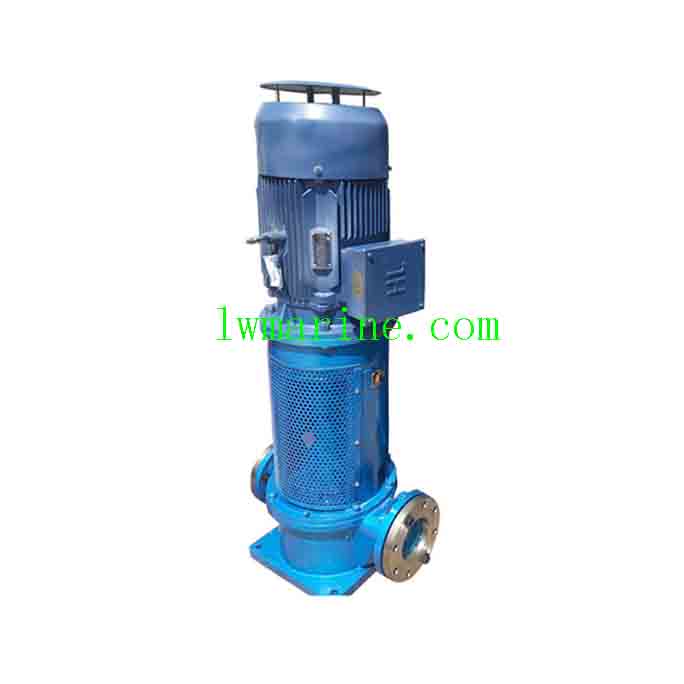
If you need marine pump, please contact us freely.